Tariq Ramadan Quotes
I'd say that the modern social sciences are just showing us why the conditions for implementing Hudud are so demanding, and thus Hudud should only be for the absolutely last resort.
Ramadan, Tariq. Radical Reform: Islamic Ethics and Liberation. Oxford University Press, 2009, p. 275.


It is hard to imagine what could be harsher. Some have called for his arrest and trial for crimes against humanity.

While this hadith has been used to justify murdering converts or even those who criticize actions taken in the name of Islam, this statement should be seen in historical context whereby Christians also commonly murdered “heretics,” and during the Protestand reformation, both Catholics and Protestants routinely murdered not only converts from their faith, but non believers such as Jews and Muslims. The Old Testament also advocated death for heretics.


Brigham's remark was made in 1853—the Saints were in the midst of a serious struggle for subsistence in the Salt Lake Valley. Famine was a serious threat in these years and those who thieved from their neighbors under such conditions put others' well-being and even lives at risk. The frontier was known for lawless behavior among some, far from military or police power. Under these conditions, thievery could well result in the suffering and death of victims and others in their communities—hence Young’s determination to stamp it out.

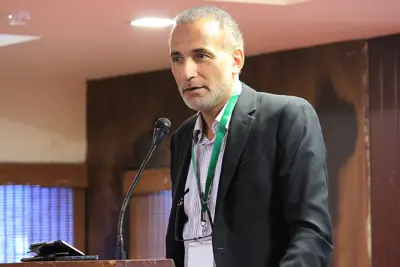
Tariq Ramadan is a Swiss Muslim academic, philosopher, and writer. He was a professor of contemporary Islamic studies at St Antony's College, Oxford and the Faculty of Theology and Religion, University of Oxford, but as of 2018 is taking an agreed leave of absence. He is a visiting professor at the Faculty of Islamic Studies at Hamad Bin Khalifa University in Qatar, and the Université Mundiapolis in Morocco. He is also a senior research fellow at Doshisha University in Japan. He is the director of the Research Centre of Islamic Legislation and Ethics (CILE), based in Doha. He is a member of the UK Foreign Office Advisory Group on Freedom of Religion or Belief. He was elected by Time magazine in 2000 as one of the seven religious innovators of the 21st century and in 2004 as one of the 100 most influential people in the world and by Foreign Policy readers (2005, 2006, 2008–2010, 2012–2015) as one of the top 100 most influential thinkers in the world and Global Thinkers. Ramadan describes himself as a "Salafi reformist".
