Thomas Szasz Quotes
If he who breaks the law is not punished, he who obeys it is cheated. This, and this alone, is why lawbreakers ought to be punished: to authenticate as good, and to encourage as useful, law-abiding behavior. The aim of criminal law cannot be correction or deterrence; it can only be the maintenance of the legal order.
Szasz, Thomas. The Second Sin. Anchor Press, 1973, p. 100.

This interesting historical quotation illustrates the fact that in almost every American generation there are those who believe that society has gone too far in protecting the rights of criminal suspects at the expense of law and order in the general society. This is nothing new. This is a classic argument given by those who would deny a defendant the Constitutional protection against self-incrimination. The belief that an innocent man has nothing to fear from the police is refuted by the many cases of innocent men being convicted by evidence they have given in the belief that they were innocent, and served long jail sentences only to later be proved by DNA evidence that they could not possibly have been guilty. Since Nott’s day, society has not only found many cases where honest error was made by the police or prosecutors, but many where there was venal prosecutorial misconduct and defendants were jailed even though the authorities were aware of evidence of innocence and kept it secret. There have been a number of these cases where a defendant was on death row and about to be executed when it was found he was innocent. Probably there have been men wrongly executed. See {629444} for a probable example.


Terror conceptually in France and some other countries was the tool the government used to inhibit criminals.


1st Marquees of Halifax. Even in the 18th century, it was realized that capital punishment was not a particularly good deterrent. Savile and others observed that there was a significant vengeance motive for state execution.


Kennedy, the father of JFK, had been one of the sleaziest of the stock market manipulators in the country. Prior to 1934 the Republican Hoover philosophy had prevailed letting the market regulate itself. But the practices of many of the Wall Street leaders were by modern standards outright thievery.FDR created the first Commission to regulate publicly traded stock transactions and schemes. He made a shrewd pick with Kennedy who was very egotistical and ambitious for power and recognition for Kennedy not only was an accomplished master at the skullduggery of the day, but he had no loyalty to the wealthy brokerage and financial leadership class as Kennedy was a Roman Catholic and at the time Catholics were never really accepted by upper class Protestant society. He turned out to be not only the first SEC Chairman but the one who demonstrated the efficacy of such regulation. He was then rewarded with the Ambassadorship to England the plum diplomatic assignment of the country.


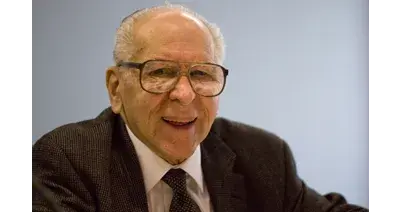
Thomas Stephen Szasz was a Hungarian-American academic, psychiatrist and psychoanalyst. He served for most of his career as professor of psychiatry at the State University of New York Upstate Medical University in Syracuse, New York. A distinguished lifetime fellow of the American Psychiatric Association and a life member of the American Psychoanalytic Association, he was best known as a social critic of the moral and scientific foundations of psychiatry, as what he saw as the social control aims of medicine in modern society, as well as scientism. His books The Myth of Mental Illness (1961) and The Manufacture of Madness (1970) set out some of the arguments most associated with him.
