Matthew Hale Quotes
Let me remember, when I find myself inclined to pity a criminal, that there is likewise a pity due to the country.
Matthew Hale, 1609-1676, Chief Justice of England, Historia Placitorum Coronae
Sourced by: Eigen's Political and Historical Quotations


This interesting historical quotation illustrates the fact that in almost every American generation there are those who believe that society has gone too far in protecting the rights of criminal suspects at the expense of law and order in the general society. This is nothing new. This is a classic argument given by those who would deny a defendant the Constitutional protection against self-incrimination. The belief that an innocent man has nothing to fear from the police is refuted by the many cases of innocent men being convicted by evidence they have given in the belief that they were innocent, and served long jail sentences only to later be proved by DNA evidence that they could not possibly have been guilty. Since Nott’s day, society has not only found many cases where honest error was made by the police or prosecutors, but many where there was venal prosecutorial misconduct and defendants were jailed even though the authorities were aware of evidence of innocence and kept it secret. There have been a number of these cases where a defendant was on death row and about to be executed when it was found he was innocent. Probably there have been men wrongly executed. See {629444} for a probable example.


There is not much difference between England then and America now.


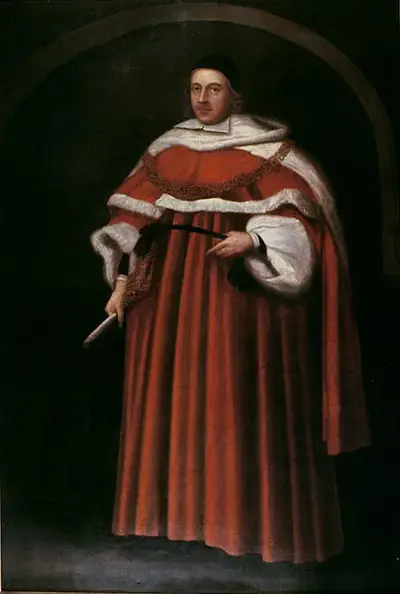
Sir Matthew Hale SL was an influential English barrister, judge and jurist most noted for his treatise Historia Placitorum Coronæ, or The History of the Pleas of the Crown. Born to a barrister and his wife, who had both died by the time he was 5, Hale was raised by his father's relative, a strict Puritan, and inherited his faith. In 1626 he matriculated at Magdalen Hall, Oxford (now Hertford College), intending to become a priest, but after a series of distractions was persuaded to become a barrister like his father thanks to an encounter with a Serjeant-at-Law in a dispute over his estate. On 8 November 1628 he joined Lincoln's Inn, where he was called to the Bar on 17 May 1636. As a barrister, Hale represented a variety of Royalist figures during the prelude and duration of the English Civil War, including Thomas Wentworth and William Laud; it has been hypothesised that Hale was to represent Charles I at his state trial, and conceived the defence Charles used. Despite the Royalist loss, Hale's reputation for integrity and his political neutrality saved him from any repercussions, and under the Commonwealth of England he was made Chairman of the Hale Commission, which investigated law reform. Following the Commission's dissolution, Oliver Cromwell made him a Justice of the Common Pleas.
