Thomas Carlyle Quotes
It is wonderful to hear what account we at present give ourselves of the punishment of criminals. No "revenge"--O Heavens, no; all preachers on Sunday strictly forbid that; and even (at least on Sundays) prescribe the contrary of that. It is for the sake of "example," that you punish; to "protect society" and its purse and skin; to deter the innocent from falling into crime; and especially withal, for the purpose of improving the poor criminal himself,--or at lowest, of hanging and ending him, that he may not grow worse. For the poor criminal is, to be "improved" if possible:
There is not much difference between England then and America now.
Thomas Carlyle, 1795-1881, Scottish essayist and historian, Member of Parliament, Model Prisons, March 1, 1850
Sourced by: Eigen's Political and Historical Quotations


“Catiff” is a Middle English term to describe a lowly, despicable person.


This is the earliest surviving attempt of the Romans to formulate a legal code.

This interesting historical quotation illustrates the fact that in almost every American generation there are those who believe that society has gone too far in protecting the rights of criminal suspects at the expense of law and order in the general society. This is nothing new. This is a classic argument given by those who would deny a defendant the Constitutional protection against self-incrimination. The belief that an innocent man has nothing to fear from the police is refuted by the many cases of innocent men being convicted by evidence they have given in the belief that they were innocent, and served long jail sentences only to later be proved by DNA evidence that they could not possibly have been guilty. Since Nott’s day, society has not only found many cases where honest error was made by the police or prosecutors, but many where there was venal prosecutorial misconduct and defendants were jailed even though the authorities were aware of evidence of innocence and kept it secret. There have been a number of these cases where a defendant was on death row and about to be executed when it was found he was innocent. Probably there have been men wrongly executed. See {629444} for a probable example.

1st Marquees of Halifax. Even in the 18th century, it was realized that capital punishment was not a particularly good deterrent. Savile and others observed that there was a significant vengeance motive for state execution.


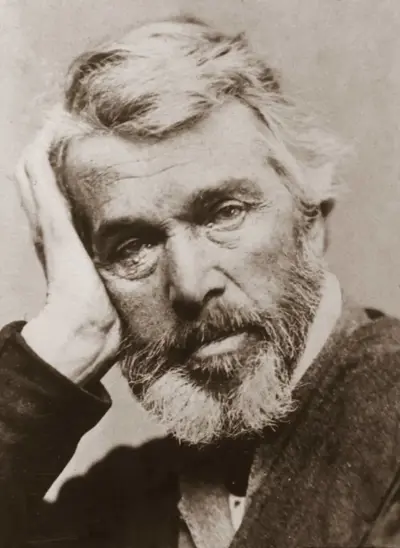
Thomas Carlyle was a Scottish historian, satirical writer, essayist, translator, philosopher, mathematician, and teacher. In his book On Heroes, Hero-Worship, and The Heroic in History (1841), he argued that the actions of the "Great Man" play a key role in history, claiming that "the history of the world is but the biography of great men". Other major works include The French Revolution: A History, 3 vols (1837) and The History of Friedrich II of Prussia, Called Frederick the Great, 6 vols (1858–65).
