Thomas Carlyle Quotes
And so you take criminal caitiffs, murderers, and the like, and hang them on gibbets "for an example to deter others." Whereupon arise friends of humanity, and object. With very great reason, as I consider, if your hypothesis be correct. What right have you to hang any poor creature "for an example"? He can turn round upon you and say, "Why make an 'example' of me, a merely ill-situated, pitiable man? Have you no more respect for misfortune? Misfortune, I have been told, is sacred. And yet you hang me, now I am fallen into your hands; choke the life out of me, for an example! Again I ask, Why make an example of me, for your own convenience alone?
“Catiff” is a Middle English term to describe a lowly, despicable person.
Thomas Carlyle, 1795-1881, Scottish essayist and historian, Member of Parliament, Criticism of Capital Punishment as a deterrent, Model Prisons, March 1, 1850
Sourced by: Eigen's Political and Historical Quotations

There is not much difference between England then and America now.


1st Marquees of Halifax. Even in the 18th century, it was realized that capital punishment was not a particularly good deterrent. Savile and others observed that there was a significant vengeance motive for state execution.


Although this is generally followed as a legal principle in America, states like Texas have executed felons who most other jurisdictions would see as Coke’s “mad man.”


The capital punishment debate was raging in Europe. Belgium and parts of Switzerland had just abolished the death penalty.

France was coming under great criticism from the rest of Europe for the bloodbath of executions that the Revolution had become. Many French thought that perhaps they were executing too many people. Saint-Just urged them to hold the course and they did.

Arguing for the Constitution's granting the unfettered Pardoning Power to the President.


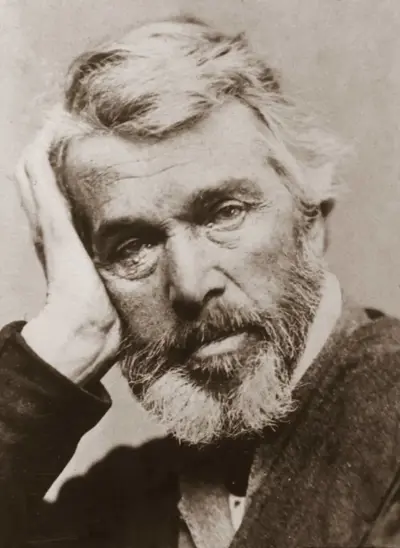
Thomas Carlyle was a Scottish historian, satirical writer, essayist, translator, philosopher, mathematician, and teacher. In his book On Heroes, Hero-Worship, and The Heroic in History (1841), he argued that the actions of the "Great Man" play a key role in history, claiming that "the history of the world is but the biography of great men". Other major works include The French Revolution: A History, 3 vols (1837) and The History of Friedrich II of Prussia, Called Frederick the Great, 6 vols (1858–65).
