Naguib Mahfouz Quotes
According to Islamic principles, when a man is accused of heresy, he is given the choice between repentance and punishment.
Mahfouz, Naguib. "Naguib Mahfouz, The Art of Fiction No. 129." Interview by Charlotte El Shabrawy. The Paris Review, vol. 34, no. 129, Summer 1992.


While this hadith has been used to justify murdering converts or even those who criticize actions taken in the name of Islam, this statement should be seen in historical context whereby Christians also commonly murdered “heretics,” and during the Protestand reformation, both Catholics and Protestants routinely murdered not only converts from their faith, but non believers such as Jews and Muslims. The Old Testament also advocated death for heretics.

In an orthodox Muslim nation, freedom of speech as a right is impossible.

Theological & Legal Expert. The Sunnah, like the Koran, has statements of the Prophet, Mohammad. A fatwa is a religious legal ruling. This particular Fatwa shows the great difference between the Islamic State and a Republic or Democracy. In the latter forms, any religious practices must be consistent with the Constitution. Even though blasphemy might be prohibited by a religion, the United States Constitution for example protects anyone’s right to be blasphemous. In the Islamic system any constitution or law is subservient to and must be consistent with, the sayings of the Prophet Muhammad. In that sense, unless the Muslim populated nation is secular like Turkey, then the governments are partial or total theocracies.

In September of 2005 a Danish Newspaper published some political cartoons showing the hypocrisy of some Muslims who use Islam to justify murder of innocents and terrorism. Months later, in January of 2006 many in the Middle East protested vehemently and Muslim riots broke out because the Prophet Muhammad's visage was depicted against Islamic tradition. Many Muslim nations started a boycott against Denmark. Many Muslim leaders claimed that insulting religion was an “abuse” of freedom of speech including those from nations which regularly publish material that is virulent against Christians and Jews. The Sheikh along with many other Muslims called for the death penalty for the cartoonist who was exercising his Danish right of freedom of expression.
This is the justification that some Muslims use for the murder of prisoners of war if the war is perceived to be an attack on Allah. This for most includes Westerners.
This is a very important point as most Muslims believe that the actual wording of the Sharia—Islamic Law—comes from the Prophet directly and are not the words of various legal scholars which is just what they are. Needless to say, there are many differences and even contradictions depending on time and the particular scholar. Islam however has no authority that religiously is higher than any other. In that respect, it is like Judaism. There is not a recognized religious hierarchy as there is in Christian churches.
The Prophet Muhammad when he was the spiritual and civil leader never called for the death of anyone who insulted him. This is strictly a mania of extremist followers of Islam. However, it should be kept in mind that the Roman Catholic Church in its history murdered people for insulting the Pope or Jesus. It all stems from the Old Testament call for the execution of heretics and blasphemers.
The reason he claimed that Governor Taseer was a blasphemer was that the governor opposed death penalty for saying or writing anything that was heresy or blasphemy as interpreted be fundamentalist Muslims. The Governor knew he was taking a risk. See {620970} .

In the terrorists perverted logic, infidels are to be killed therefore all Iraqis who would vote would be targeted. Numerous Iraqi election officials were murdered by the terrorists as well as Iraqis who registered to vote.
He had whipped the crowd up into a feverish pitch until someone rushed the bound and tied blacksmith and stabbed him to death. He had only criticized Mathias for being too harsh and stern a leader.


If some Islamic cleric declares a war or dispute to be an attack on Islam, the penalty is indeed severe for those Muslims who do not join the fight. In some Islamic lands, unbelievers are put to death. Note that the children become the Islamic society’s hostages for the behavior of the father.


Perhaps this quotation gives the best insight to the major difference between an Islamic perspective of law and the Western. The latter places the rights of the individual on a par with or even superior to that of the society as a whole. The former is more concerned with the effect and result on society as a whole than concern with the individual rights of single individuals.

In an orthodox Muslim nation, freedom of religion as a right is impossible.
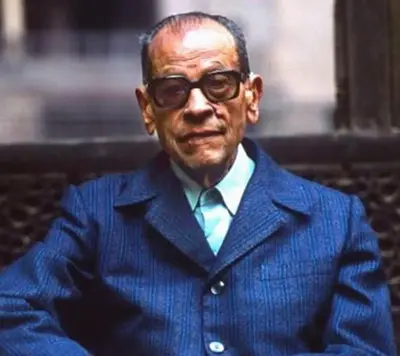
Naguib Mahfouz was an Egyptian writer who won the 1988 Nobel Prize for Literature. He is regarded as one of the first contemporary writers of Arabic literature, along with Taha Hussein, to explore themes of existentialism. He published 34 novels, over 350 short stories, dozens of movie scripts, hundreds of op-ed columns for Egyptian newspapers, and five plays over a 70-year career. Many of his works have been made into Egyptian and foreign films.
