Alexis de Tocqueville Quotes
I studied the Koran a great deal. I came away from that study with the conviction there have been few religions in the world as deadly to men as that of Muhammad.
Tocqueville, Alexis de. The Tocqueville Reader: A Life in Letters and Politics. Edited by Olivier Zunz and Alan S. Kahan, Blackwell Publishing, 2002, p. 229.

This is a very important point as most Muslims believe that the actual wording of the Sharia—Islamic Law—comes from the Prophet directly and are not the words of various legal scholars which is just what they are. Needless to say, there are many differences and even contradictions depending on time and the particular scholar. Islam however has no authority that religiously is higher than any other. In that respect, it is like Judaism. There is not a recognized religious hierarchy as there is in Christian churches.
The Messenger is Muhammed, founder of Islam. The Hadith are his sayings which have been compiled but are not in the Koran.

His views are a mix of modernism and fundamentalism. He favors democracy and elections but also favored the Taliban destroying the great ancient Buddha statues when he was called an idol worshipper for urging the preservation of art.


This is another of De Tocqueville’s prescient statements that in retrospect seem so amazing given the time. This quotation could serve as an op ed in a newspaper of any of the industrial democracies of the early 21st century. However, he did not have the information of the details we have today that showed Islam as the pinnacle of scientific, philosophical, literary and medical achievement at the beginning of the second millennium, while the Christian nations of Europe were mired in the Dark Ages. It was the same Koran but a very different interpretation and framework that led to the decadence while it was the Protestant Reformation that triggered a Christianity that was hospitable to modernity and enlightenment.


“Musselman” was then a term for Muslims used by Europeans. The Arabs then, as many terrorists still do, commonly captured American and European ships enslaving the crews and passengers or holding them for ransom. Jefferson and Adams explained that if this could not be stopped and resolved it might mean war. The Americans could not understand why they were attacked when American had done nothing to offend the Arab Counties. The Arab envoy explained their “duty” and “right” to attack Americans and why war was not a serious deterrent to Islamic nations. Ironically, the same explanations were given by Arab leaders in the early 21st century to illustrate why the Arab countries could not be intimidated.


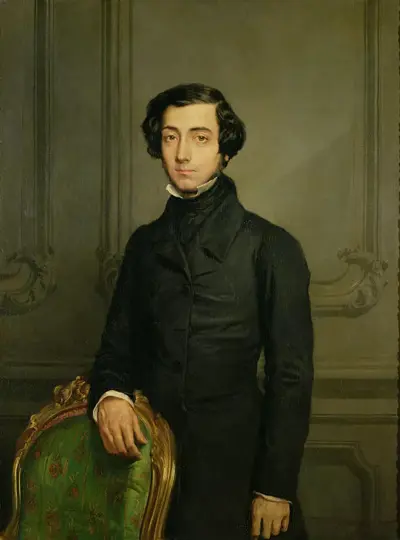
Alexis Charles Henri Clérel, comte de Tocqueville, colloquially known as Tocqueville (/ˈtɒkvɪl, ˈtoʊk-/), was a French aristocrat, diplomat, political scientist, political philosopher and historian. He is best known for his works Democracy in America (appearing in two volumes, 1835 and 1840) and The Old Regime and the Revolution (1856). In both, he analysed the improved living standards and social conditions of individuals as well as their relationship to the market and state in Western societies. Democracy in America was published after Tocqueville's travels in the United States and is today considered an early work of sociology and political science.
