Mother Jones Quotes
I went West and took part in the strike of the machinists - the Southern Pacific Railroad, the corporation that swung California by its golden tail, that controlled its legislature, its farmers, its preachers, its workers.
Jones, Mary Harris. The Autobiography of Mother Jones. Charles H. Kerr & Company, 1925, p. 142.


The factory workers in Lynn, Massachusetts started their own newspaper: This was published four years before Marx and Engles published the Communist Manifesto


Jefferson was one of the first political and economic thinkers to express concern over the “wage slave” concept of the industrial revolution. This was one of the major reasons that he was not in consonance with Alexander Hamilton in his economic vision for America. While we followed the Hamilton direction, there are still issues of maintaining freedom and independence for an employee in modern nations and economies.


Niles, a Southern editor was none the less anti-slavery. Other than the gross immorality of slavery, he saw that the economics of the institution actually inhibited the economic development of the South very early. Efficiency of machinery and organization of work and labor saving inventions were not as badly needed in a slave economy where human labor was so inexpensive. While in the North and most of Europe, there was skilled, but expensive, labor of freemen. This motivated all to improve processes and technology and increase productivity. There was much less motivation in the South and the slaves who actually understood the work had no way to experiment and were not allowed to read or write so the South was almost economically and technologically stagnant in comparison to the free labor states.


Ten cents a day was a very low wage—it was about the equivalent of a meal at a tavern at the time. Workers throughout the country were outraged and give him a derogatory nickname—see Quotation 643585.


He had squads of thugs that he would “rent” out to other gangsters for their enforcement activities and to unions to protect themselves from goons and intimidate non union workers. However, he would not let his men work as goons and strike busters or for companies—despite huge pay offers—to keep their workers in line, a common practice at the time.


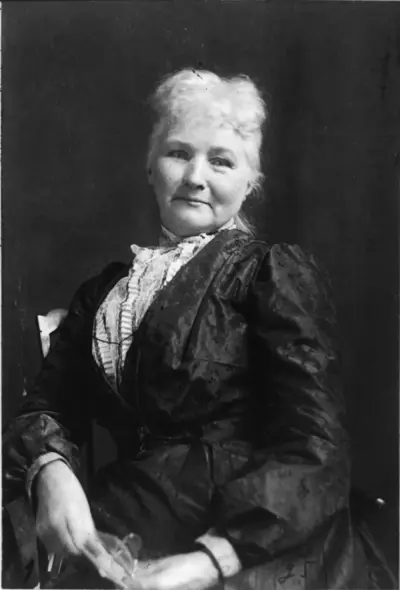
Mary G. Harris Jones, known as Mother Jones from 1897 onwards, was an Irish-born American schoolteacher and dressmaker who became a prominent union organizer, community organizer, and activist. She helped coordinate major strikes and co-founded the Industrial Workers of the World.
