Hezekiah Niles Quotes
The dearest interests of the Southern states are involved in the adoption of measures for the support and encouragement of free laboring whites.
Niles, a Southern editor was none the less anti-slavery. Other than the gross immorality of slavery, he saw that the economics of the institution actually inhibited the economic development of the South very early. Efficiency of machinery and organization of work and labor saving inventions were not as badly needed in a slave economy where human labor was so inexpensive. While in the North and most of Europe, there was skilled, but expensive, labor of freemen. This motivated all to improve processes and technology and increase productivity. There was much less motivation in the South and the slaves who actually understood the work had no way to experiment and were not allowed to read or write so the South was almost economically and technologically stagnant in comparison to the free labor states.
Hezekiah Niles, 1777-1839, Editor and Publisher of Niles’ Weekly Register, Editorial, Niles’ Weekly Register, December 15, 1821
Sourced by: Eigen's Political and Historical Quotations


Labor reform was a burning issue in most of the industrialized countries of the world. The two areas that legislation was under consideration all over were working hours and child labor. There were no overtime provisions, employers were free to require workers to work 7 days for as many hours as they wanted. There were no limitations on the use of child labor. This is one of the classic conservative oppositions to these reforms. Ironically to us today, those against reform argued that it was disrespectful of the working man to take away his freedom to work whatever hours he so chose, and it was disrespectful of the workers role as a head of family to decide for him when and under what conditions his children could work. Germany at the time was a very dramatic example of the struggle as the Chancellor was opposed to all labor reform and Kaiser Wilhelm II felt that reforms were needed. The two most powerful Germans were split on this issue as were people in most countries.

The left has always been ambivalent about automation. Many object to it on the grounds that it puts men out of work. However, others such as Lafage, argued that automation was the only economic way to reform the working hours and conditions of labor. The problem at the time was that as long as labor was so cheap, there was no motivation for the manufacturer to invest in better machinery. He and many others argued that minimum wages and their increases increase productivity because it would force manufacturers to invest in more productive equipment to reduce their labor costs.


the Bolshevik Communists of Russia Zenzinov was often a critic of the Bolsheviks.
The factory workers in Lynn, Massachusetts started their own newspaper: This was published four years before Marx and Engles published the Communist Manifesto


One hundred years later, many in America would come to this same conclusion and American manufacturing, to outcompete China and other Oriental cultures, have turned to highly complex, constantly innovative, and technically advanced processes.
He had squads of thugs that he would “rent” out to other gangsters for their enforcement activities and to unions to protect themselves from goons and intimidate non union workers. However, he would not let his men work as goons and strike busters or for companies—despite huge pay offers—to keep their workers in line, a common practice at the time.

Ten cents a day was a very low wage—it was about the equivalent of a meal at a tavern at the time. Workers throughout the country were outraged and give him a derogatory nickname—see Quotation 643585.


This was an honest theoretical belief of Mises. However, most of the criticism of capitalism in the industrial democracies is precisely the lack of unemployment and sustenance for all. When it does, even complaints about inequality tend to be minimal. But some capitalist societies never provided these, and by the 21st century, no capitalist nation was able to do so permanently without recessions and depressions.


There are some conservative economists and businessmen who believe that it is desirable to have some unemployment as a bulwark against inflation. If there are people without jobs, they will hold the general wage rates down.


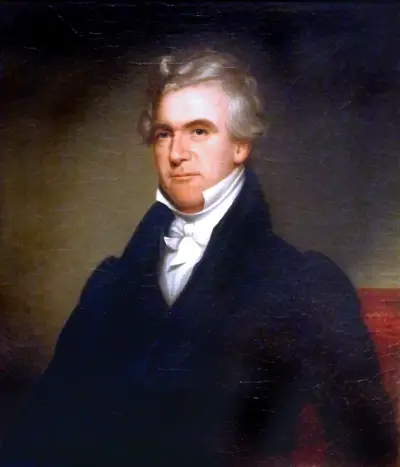
Hezekiah Niles, was an American editor and publisher of the Baltimore-based national weekly news magazine, Niles' Weekly Register (aka Niles' Register) and the Weekly Register.
