John Wycliffe Quotes
I shall not die, but live, and declare the evil deeds of the friars.
Wycliffe had come down with a serious illness and appeared to be dying. The friars gathered at his bedside assuming that he would repent his attacks on the church, the friars and the Pope with his last rites. Instead, he pronounced this famous line. The churchmen left in disgust waiting for him to die. But he did not and vexed the established church and its representatives for a few more years. Wycliffe was castigated and had his books burned for his attacks on priests and bishops. A thousand years earlier another man was canonized as a Saint for similar attacks. See {618186}
John Wycliffe, c. 1320-1384, English religious reformer & Bible translator, Statement ~1380
Sourced by: Eigen's Political and Historical Quotations


The Bull was directed at French King Louis VII. On Christmas Eve the year before Zengi had broken into the city of Edessa and massacred the French inhabitants. This was the Proclamation of the start of the 2nd Crusade. Note that the Pope, in order to raise troops and money for the Crusades, used the remission of previous sins to motivate Pietro dei Paganelli di Montemagno


This is one of the passages of the Bible that Christian Kings cited in expecting obedience. Most of the monarchs took this passage to mean that God had selected and appointed them to rule.


After returning from church one Sunday, Coolidge’s wife asked him what the sermon was about and in his usual taciturn manner, he replied, “Sin.” His wife asked for details about what the preacher specifically said and this was his answer.

Jefferson wrote his friend that the New England clergy had opposed him because he would block their efforts to merge church and state. Inscribed in the rotunda of the Jefferson Memorial in Washington DC. The third sentence is often quoted without the first two.

This verse has been one of the bases of Muslim theocratic states like Iran’s claim to legitimacy. The word “govern” is sometimes translated as “judge.” In the context of the 6th century, there were no separation of powers as we know them and judging, governing and legislating were melded.


The Irish monks were loyal to the pope and were outraged when he was displaced by King Henry VIII. They were seen as a hotbed of disloyalty and therefore ordered to close. This is one of the many examples where an established government church dictated not only how people should worship but also prohibit other religions from functioning. These examples were well known to the American Founding Fathers and much of educated American opinion which was one of the drivers of the First Amendment and the separation of church and state.

Constantine the Great. This is one of Constantine’s major defenses of his decision to adopt Christianity. Scholars today still argue as to what part practical politics played in Constantine’s conversion and what part was his personal religious conversion.


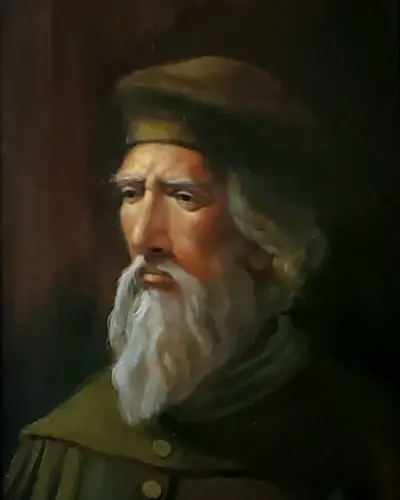
- Born:
- Died: December 31, 1384
- Nationality: English
- Profession: Theologian
John Wycliffe was an English scholastic philosopher, theologian, biblical translator, reformer, priest, and a seminary professor at the University of Oxford. He became an influential dissident within the Roman Catholic priesthood during the 14th century and is considered an important predecessor to Protestantism.
