Eugene III Quotes
We enjoin it for the commission of sins, that ... the most powerful of the nobles should vigorously gird themselves to oppose the multitude of the infidels who are now rejoicing in the victory they have gained over us ... by so much spilling of your father's blood.
The Bull was directed at French King Louis VII. On Christmas Eve the year before Zengi had broken into the city of Edessa and massacred the French inhabitants. This was the Proclamation of the start of the 2nd Crusade. Note that the Pope, in order to raise troops and money for the Crusades, used the remission of previous sins to motivate Pietro dei Paganelli di Montemagno
Eugene III, 1080—1153, , Roman Catholic Pope, Quantum Praedecessores, Papal Bull, December 1, 1145
Sourced by: Eigen's Political and Historical Quotations


For many extremists Muslims, this sura calls for the torture or killing of the enemies of Islam. For the more moderate Muslims, the penalty of opposing Islam should be expulsion or banishment. The further modern complication of this sura is the definition of “making war with Allah.” To some extremists, it is writing or publishing anything contrary to their view of Islam; it is occupying any Islamic nation or warring with that nation even though the basis of the war might have nothing to do with religion; it is bringing a Bible into an Islamic nations; it is allowing alcohol to be sold and served; it is opposing their discriminatory customs and laws; it is pressuring them not to stone adulteresses.

The juxtaposition of scenes of murder and brutality together with God and holy purposes seems foreign to us today. It is extant among some Islamic groups who exult in similar scenes while calling to God. This “barbarity” is historically not just Islamic but was typical of Christians as well. Beheading was common in the Crusades, and it is still popular among some of the Islamic extremists who look to the “old days” as a model for them today.


Most sophisticated Muslim theologians would not agree at all with the “permission” he quotes from the Koran. However, there is no hierarchy of belief in Islam and there are tens of thousands of Muslim imams and millions of individual Muslims who believe and teach just what this particular terrorist stated.
In the early stages of Islam, Muhammad had hoped to convert the Jews and others on the Arabian Peninsula. When they refused to be converted, he warred against them usually killing the men, and taking the women and children as slaves. The result was that non-believing tribes were “cleansed” from the Arabian Peninsula. The Muslims at the time preferred children as slaves. For then they could convert the children against their will. Adults in Islam must accept Islam in order to convert. Children are regarded as having no such maturity of decision making and therefore opposition to conversion may be ignored and they may be forced. Critics of Islam and those who argue that Islam is at odds with all other religions point to this quotation. They claim that it is the only religion whose founder and fundamental scriptures demand war against others for no other reason than that they believe in a different religion. The Catholic Church during the Crusades and the Inquisition had a similar philosophy as did Christian missionaries colonizing Africa later. One difference is that most Christians today repudiate the doctrine as against the true spirit and teachings of Christ and view it as historical error, while very few modern Muslims repudiate this quotation of the Prophet.

This sura is interpreted in two ways. For many modern Muslims it means that in discussions and debates on religion with non-Muslims, do not back off, and if you do it is a religious transgression. Defend the faith. For the fundamentalists and extremists, they interpret the same sura in physical warlike terms. So if there is a fight or battle with disbelievers, retreating from the battlefield is not only cowardice and perhaps a crime under military regulations as it is in the West, but it is in Christian terms a mortal sin for which there one will go to hell. So the most religious of Muslims will fight to the death using this sura as their guidance. On the other hand, Muhammad himself as the military and civil leader of Islam made strategic retreats. In the history of almost all warfare between the West and Muslims—especially the Arabs—courage on the battlefield has been lacking and the Israelis, British, French, Americans, and Hindus of India all observe this military weakness and accounting for this is built into their military doctrine.
Terrorism is not new to Islam. It was proscribed by the Prophet when fighting the “enemies of Allah.” There are those who believe that he was not advocating terrorism as we know that term today. Instead they believe that he meant that they should scare and intimidate the enemies of God, and the sura does not explicitly promote or sanction the murder of innocent civilians. They would interpret this quotation to mean “Attack the military enemies of God so severely that they well fear you and be intimidated.” Others see the quotation as an explicit endorsement of terrorism. What better than beheading or exploding random members of a society that is opposing Islam and Allah in order to “strike terror into the hearts of the enemies of Allah.”


Odo of Chatillon-Sur-Marne. Westerners who look with horror at the religious promises of Islamic clerics that suicide bombers and other Muslims who die “defending Islam” will immediately pass to Paradise without the usual requirements and judgments which might deny admission because of previous sins. However, this is exactly what the Christians did in the Crusades as this well documented quotation demonstrates. To see the Islamic version, go to {617166}


To modern readers this quotation is surprising in that Bryan is historically viewed as an extreme religious zealot. However, this was his mid-career and the extreme religious identification came later when he was out of office and made his living speaking to religious groups.


The hatred of the English was so great in Germany during WWI that this phrase substituted for the usual “Good Morning” and “Good Bye” etc.
This sura is interpreted by some Islamic fundamentalists as absolution for the killing of a non-Muslim by a Muslim. It was Allah who did it. In a greater sense, critics of Islam observe that many Muslims and Islamic nations have a double standard of responsibility for crimes. If the victims are Muslims, the normal standards of morality hold; but if a non-believer there can be no crime. Terrorism, torture, beheading, mass murder can all be done with a clean conscience if a Muslim takes this interpretation of this sura. Many Muslims however take an opposite point of view. These people do not have the concept of fatalism and lack of free will that others believe. There is a parallel to this problem in Judeo Christian countries although it is less common statistically. But the murder of physicians who perform abortions, and the Jewish radical fundamentalist who killed innocent Arabs at worship are examples of people who viewed themselves as instruments of God in their heinous activities.
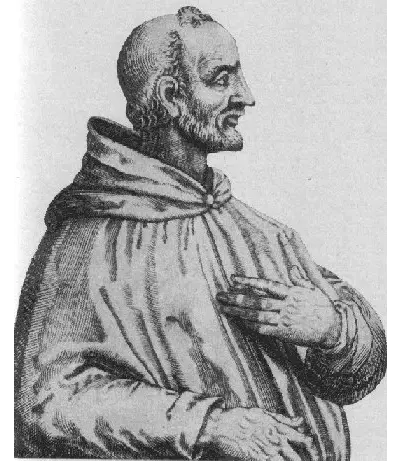
Pope Eugene III, born Bernardo Pignatelli, or possibly Paganelli, called Bernardo da Pisa, was head of the Catholic Church and ruler of the Papal States from 15 February 1145 to his death in 1153. He was the first Cistercian to become pope. In response to the fall of Edessa to the Muslims in 1144, Eugene proclaimed the Second Crusade. The crusade failed to recapture Edessa, which was the first of many failures by the Christians in the crusades to recapture lands won in the First Crusade. He was beatified in 1872 by Pope Pius IX.
