William Jennings Bryan Quotes
How many lives have been lost by men who believe God had commanded them to do so?
To modern readers this quotation is surprising in that Bryan is historically viewed as an extreme religious zealot. However, this was his mid-career and the extreme religious identification came later when he was out of office and made his living speaking to religious groups.
William Jennings Bryan, 1860-1925, U. S. Secretary of State, U. S. Congressman (Democrat, NB), 3 Time Unsuccessful Democratic Presidential Candidate, Campaign Speech, 1900
Sourced by: Eigen's Political and Historical Quotations


The Bull was directed at French King Louis VII. On Christmas Eve the year before Zengi had broken into the city of Edessa and massacred the French inhabitants. This was the Proclamation of the start of the 2nd Crusade. Note that the Pope, in order to raise troops and money for the Crusades, used the remission of previous sins to motivate Pietro dei Paganelli di Montemagno


Many would argue that the situation is the same today, over a hundred years later.

The source was in the form of an autobiography but was written later by someone unknown. Prior to WWII and the German killing of over 25 million people, Tamerlane was responsible for more killings than any other ruler in the world. 17 million is generally given as the number if one analyses the Persian, Indian and other literature. He controlled the Middle East, the Ottoman States, a part of Russia and Eastern Europe, Persia and much of China and India. Although he himself was a Muslim he warred against other Muslim states and warlords defeating them all. Muslim nations are historically very ambivalent about Tamerlane. Pride as a conqueror is eclipsed by this excessive rapine and murder. In one case, the Persian city of Isfahan, he actually built a giant pyramid of 70,000 decapitated heads of prisoners. Also, the fact that he attacked and defeated major Muslim empires violates a current Muslim notion that there is a unity of Islam. He attacked, conquered and butchered the Ottomans, Syria, Iraq, Persia and the Muslim (Mugal) states of India.

In the early stages of Islam, Muhammad had hoped to convert the Jews and others on the Arabian Peninsula. When they refused to be converted, he warred against them usually killing the men, and taking the women and children as slaves. The result was that non-believing tribes were “cleansed” from the Arabian Peninsula. The Muslims at the time preferred children as slaves. For then they could convert the children against their will. Adults in Islam must accept Islam in order to convert. Children are regarded as having no such maturity of decision making and therefore opposition to conversion may be ignored and they may be forced. Critics of Islam and those who argue that Islam is at odds with all other religions point to this quotation. They claim that it is the only religion whose founder and fundamental scriptures demand war against others for no other reason than that they believe in a different religion. The Catholic Church during the Crusades and the Inquisition had a similar philosophy as did Christian missionaries colonizing Africa later. One difference is that most Christians today repudiate the doctrine as against the true spirit and teachings of Christ and view it as historical error, while very few modern Muslims repudiate this quotation of the Prophet.

This is the “logic” by which Islamic terrorists have justified murder of civilians. Just as all Muslim men are fighters for Allah, all infidels are fighters against Allah and thus should die.


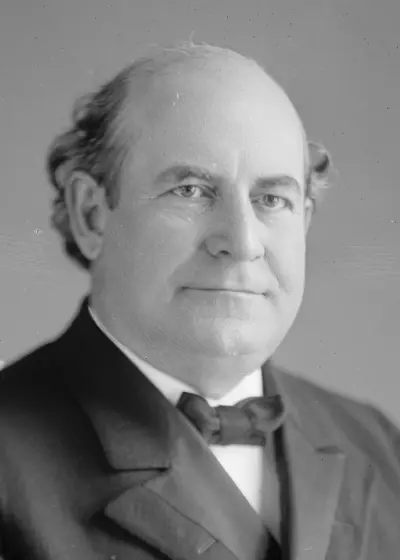
William Jennings Bryan was an American orator and politician from Illinois and Nebraska. Beginning in 1896, he emerged as a dominant force in the Democratic Party, running three times as the party's nominee for President of the United States in the 1896, 1900, and 1908 elections. He also served in the United States House of Representatives and as the United States Secretary of State under Woodrow Wilson. Because of his faith in the wisdom of the common people, he was often called "The Great Commoner".
