Hipparchia Quotes
I honor you as a daughter should" she said, "but I will take my own life if you do not give me your blessing to marry Crates
A poor philosopher who was twice her age and beneath her social status. She not only married the man of her choice but advocated and taught that all women should have such a right. She wore men’s clothing. She and her husband would make love in public as an example of sex being natural.
Hipparchia, ~346 BC-*, Greek Philosopher and one of the first feminists advocating equal rights for women, Statement to her father who at the time had total discretion about whom a daughter would wed and opposed her proposed marriage to Crates, Quoted in Maria Jamil Fasolo, http://ancienthistory.about.com/library/bl/uc_fasolo1b.htm
Sourced by: Eigen's Political and Historical Quotations


This statement is referring to the custom of women covering their eyes whenever a man who they did not know passed them. Turks did not ever use Burkas the way some other Muslim countries do, but they wore headscarves and covered their eyes when a strange man appeared. This was a shocking statement in a sexist Islamic culture. Although the process of modernization and reform in Turkey was relatively bloodless, Ataturk was prepared to and did use force to defend it. This and many others made the role of women not only uniquely equal in the Islamic world, but women were suddenly elevated to the level of most Western nations and in voting rights were ahead of most. He used his own family to set an example. See {584503}.


The law at that time gave a married woman almost no rights. The husband legally controlled the family assets regardless of who had earned or provided them. He aslo had absolute control of the upbringing of the children. Women could not vote and in many states were considered property of the husband.

See {618590} for an example of the kinds of issues which motivated her statement.

Sister of Max Eastman. Women had just obtained the vote, but it was illegal to distribute information about birth control or birth control devices. It was not until 1963 that the Supreme Court nullified criminal statutes against distributing birth control devices.


A highly respected intellectual, Schlesinger, had joined the John Kennedy Presidential Campaign. The announcement produced a slew of news stories. A Boston Globe reporter called Schlesinger’s wife, a respected intellectual figure in her own right, and asked if she was also supporting Kennedy in the Democratic Primary. She told him that she was supporting Stevenson, not Kennedy and a story with that information appeared the next day. This was embarrassing for the JFK campaign and particularly for Robert F. Kennedy, JFK’s younger brother who was the campaign director. He read the Boston Globe article, made a copy and wrote this famous quotation in the margin and sent it to Schlesinger. Historically it was unusual for the wives of public figures to hold public views different from their husbands. This was the main reason the story was news for the Boston Globe. But there were always women who maintained an independence of thought and political views, though in 1960, they were far fewer than today when this has almost become typical. However, Robert Kennedy, like Schlesinger and JFK himself had married very strong, accomplished women and they were not threatened by their wife’s independence. Hence the humorous questions Kennedy wrote.


The Greek culture was quite sexist. However, all cultures had observed strong women, some who ruled and others where wives or mistresses of rulers were very influential if not powerful.


Ironically, she was views by most Americans as an ideal wife, mother and first lady and yet she led a life of anything but that. She was a working and very successful photographer and journalist before marrying JFK. In the White House she played many successful non-traditional roles including acting as the interpreter when JFK and French President De Gaulle met in summit.

Samuel Langhorne Clemens, 1835-1910

A Polymath is a genius in a number of different subjects. She learned her mathematics initially by listening in on her brother’s tutoring sessions. She published in mathematics, geography, physics, astronomy, and biology. Although her first husband was totally unsupportive as indicated in the quotation, after his death, her second husband was a great asset to her and assisted her in many ways.
She was 1 of the 4 women who entered Oberlin College in 1837 thus becoming the first co-educational institution of higher education in the United States.

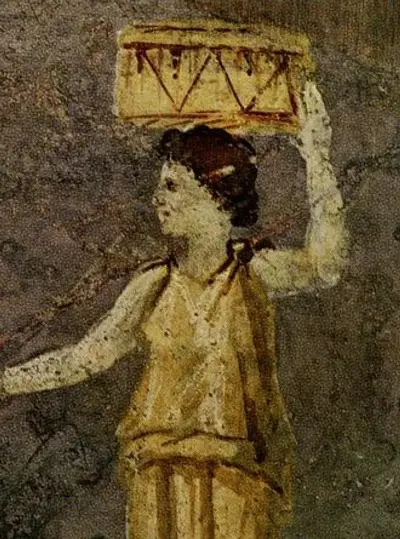
Hipparchia of Maroneia (/hɪˈpɑːrkiə/; Greek: Ἱππαρχία ἡ Μαρωνεῖτις; fl. c. 325 BC) was a Cynic philosopher, and wife of Crates of Thebes. She was the sister of Metrokles, the cynic philosopher. She was born in Maroneia, but her family moved to Athens, where Hipparchia came into contact with Crates, the most famous Cynic philosopher in Greece at that time. She fell in love with him, and, despite the disapproval of her parents, she married him. She went on to live a life of Cynic poverty on the streets of Athens with her husband.
