Robert Kennedy Quotes
Can’t you control your wife? Or are you like me?
A highly respected intellectual, Schlesinger, had joined the John Kennedy Presidential Campaign. The announcement produced a slew of news stories. A Boston Globe reporter called Schlesinger’s wife, a respected intellectual figure in her own right, and asked if she was also supporting Kennedy in the Democratic Primary. She told him that she was supporting Stevenson, not Kennedy and a story with that information appeared the next day. This was embarrassing for the JFK campaign and particularly for Robert F. Kennedy, JFK’s younger brother who was the campaign director. He read the Boston Globe article, made a copy and wrote this famous quotation in the margin and sent it to Schlesinger. Historically it was unusual for the wives of public figures to hold public views different from their husbands. This was the main reason the story was news for the Boston Globe. But there were always women who maintained an independence of thought and political views, though in 1960, they were far fewer than today when this has almost become typical. However, Robert Kennedy, like Schlesinger and JFK himself had married very strong, accomplished women and they were not threatened by their wife’s independence. Hence the humorous questions Kennedy wrote.
Robert F. Kennedy, 1925-1968, U.S. Senator (Democrat, NY), U.S. Attorney General, Note to Arthur Schlesinger Jr., 1960
Sourced by: Eigen's Political and Historical Quotations


That is easy for the man to do. At the time, this Indian view was little different than that prevailing amongst religious Christian whites.

The Greek culture was quite sexist. However, all cultures had observed strong women, some who ruled and others where wives or mistresses of rulers were very influential if not powerful.


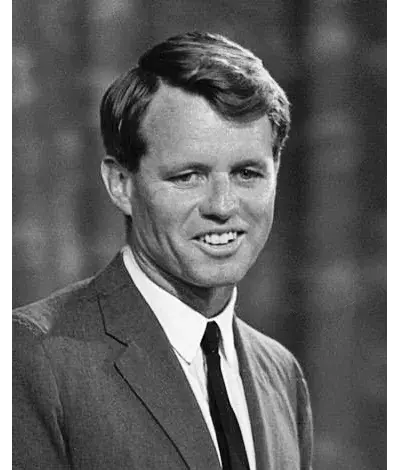
Robert Francis Kennedy, also referred to by his initials RFK or by the nickname Bobby, was an American politician and lawyer who served as the 64th United States Attorney General from January 1961 to September 1964, and as a U.S. Senator from New York from January 1965 until his assassination in June 1968. He was, like his brothers John and Edward, a prominent member of the Democratic Party and has come to be viewed by some historians as an icon of modern American liberalism.
