Lydia Ernestine Becker Quotes
The notion that the husband ought to have the headship or authority over his wife, is the root of all social evils… Husband and wife should be co-equal. In a happy marriage there is no question of ‘obedience’.
Lydia Ernestine Becker, British Biologist, Astronomer and Feminist, Speech at a meeting of the Manchester Suffrage Society, 1867
Sourced by: Eigen's Political and Historical Quotations


This relatively radical viewpoint regarding equal rights for women was expressed by Roosevelt as his Senior thesis at Harvard in 1880. In those days, the kind of scrutiny of everything a candidate ever wrote or said that is characteristic of modern politics, did not exist. It is very doubtful that if the Republican Party officials had ever known that he had espoused these views—even as a young student, that he ever would have risen so high in the party, much less get nominated at the Vice Presidential candidate which was his entree to the Presidency. When in office however, there is no record of him reviving his youthful proposal that women who marry retain their maiden names.

Within Christianity there has been a continual debate regarding a woman’s proper role in society in general and in church affairs in particular. This quotation is often used to justify a husband’s dominant role over the wife. Also it supports those who object to women in the ministry or the priesthood. See {587062}. It is useful to note that much of Islam which preaches a similar view of females, probably learned it from Christianity which preceded Islam by almost 600 years.

This type of religious sexism is not unique to Islam. Fundamentalist Christians place women in a secondary role as do fundamentalist orthodox Jews although both allow a man to take only one wife. The Islamic scripture tells us that the Prophet allowed multiple wives only if the man had the resources to care for the wives and all the children. 4 is the maximum.
This letter was written at the request of Rotrou the Archbishop of Rouen with the urging of King Henry II. Eleanor, one of the wealthiest and powerful people in Europe of either sex, left her husband and sided with one of their sons in a feud with the father, King Henry. Henry and most of the English and French courts wanted her to return to her husband and this letter was meant to chastise her behavior. She however, paid it no heed. The law of scripture to which Peter referred is a passage in the Book of Ephesians—see {618995}

In 1877 Wasburn was dropped from the List of Ministers by the Unitarian Church. He had become quite atheistic.


This is the passage of the Bible that causes many fundamentalist Christians to believe that wives should obey and be subservient to their husbands. Other Christians believe that this as archaic as stoning adulterers or executing children who are not obedient to their fathers. Ironically, this is one area where many fundamentalist Christians and fundamentalist Muslims are in agreement.

That is easy for the man to do. At the time, this Indian view was little different than that prevailing amongst religious Christian whites.


Billinghurst was physically handicapped without the use of her legs. She protested and marched in protest parades using a hand propelled tricycle which the police sometimes dumped her out of and left her immobile in alleys.


This is one of the biblical passages which cause some Christian Fundamentalists to prescribe a secondary and subjugated role for women. Also the view that women, like children, should be seen and not heard. Also it supports those who object to women in the ministry or the priesthood or in senior teaching positions. See {587063}. It is useful to note that much of Islam which preaches a similar view of females, probably learned it from Christianity which preceded Islam by almost 600 years.

Although she was very outspoken about the plight of women in society, she was very disapproving of women insisting upon rights. See {585321}.

Some modern Islamic scholars have attempted to make this Sura more acceptable by arguing that the size of the stick with which the man may beat the “disobedient” wife should be limited. The contemporary argument concentrates on the size of the stick. There are also a few fundamentalist Christians who advocate the right of a husband to beat his wife on the grounds that this was accepted in Biblical times.


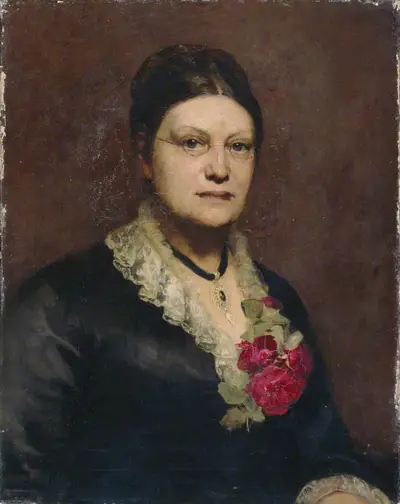
Lydia Ernestine Becker was a leader in the early British suffrage movement, as well as an amateur scientist with interests in biology and astronomy. She is best remembered for founding and publishing the Women's Suffrage Journal between 1870 and 1890.
