Mary Fairfax Somerville Quotes
I was intensely ambitious to excel in something; for I felt in my own breast that women were capable of taking a higher place in creation than that assigned them in my early days, which was very low. Nor ... should I have had courage to ask any of them a question, for I should have been laughed at. I was often very sad and forlorn; not a hand held out to help me…. My father came home for a short time, and, somehow or other finding out what I was about, said to my mother, 'Peg, we must put a stop to this, or we shall have Mary in a strait-jacket one of these days'…. I continued my mathematical and other pursuits, but under great disadvantages; for, although my husband did not prevent me from studying, I met with no sympathy whatever from him, as he had a very low opinion of the capacity of my sex, and had neither knowledge of nor interest in science of any kind…. I was considered eccentric and foolish; and my conduct was highly disapproved of by many, especially by some members of my own family…. A man can always command his time under the plea of business: a woman is not allowed any such excuse
A Polymath is a genius in a number of different subjects. She learned her mathematics initially by listening in on her brother’s tutoring sessions. She published in mathematics, geography, physics, astronomy, and biology. Although her first husband was totally unsupportive as indicated in the quotation, after his death, her second husband was a great asset to her and assisted her in many ways.
Mary Fairfax Somerville, 1780–1872, Scottish Polymath & First Female British Scientist, First Female Member of the Royal Society, Excerpts from her Memoir
Sourced by: Eigen's Political and Historical Quotations


Women were not, in the decisions of Canadian courts “Persons.” As such they were not allowed to serve as public officials and legislators. In 1929 the Judicial Committee of the Privy Council reversed previous interpretations and declared women eligible for all public offices. It became known as “The Persons Case.” Murphy then wrote her argument. Murphy wrote serious non-fiction under her own name and novels under the pseudonym Janey Canuck.


Her audiences were all familiar with the Adam & Eve Biblical narration.

SNCC had been formed to promote equality, but race and class were the issues, not gender. Many of the women left SNCC and proceeded separately to start a women’s movement.

The Bible and the Church have been the greatest stumbling blocks in the way of women’s emancipation.
The most important documents and doctrine of most churches were created by men who also established the framework of the religion. The result has in almost all cases been a sexist structure with women having not only little power not typically females are banned from all church governance. See {640303} for her quote on religion in general vis a vis women.


This statement is referring to the custom of women covering their eyes whenever a man who they did not know passed them. Turks did not ever use Burkas the way some other Muslim countries do, but they wore headscarves and covered their eyes when a strange man appeared. This was a shocking statement in a sexist Islamic culture. Although the process of modernization and reform in Turkey was relatively bloodless, Ataturk was prepared to and did use force to defend it. This and many others made the role of women not only uniquely equal in the Islamic world, but women were suddenly elevated to the level of most Western nations and in voting rights were ahead of most. He used his own family to set an example. See {584503}.

This quotation is an example of how even sophisticated institutions and leaders were plagued by various stereotypes. Dean Sperry as well as many other members of the clergy actually believed that women would not go to divinity school because they were interested in the theology but because they were looking to marry a minister. When the dean told the trustees that he had “no wisdom on this matter” is was one of the great understatements in the history of quotations. What is more ironic is that the Dean was considered very liberal having admitted Catholics, Nazarenes, and Adventists.


She was also Australia’s First Woman Cabinet Minister.


Ingersoll was considered to be the greatest orator and political thinker of his day, but his overt atheistic views curtailed his elected political career.
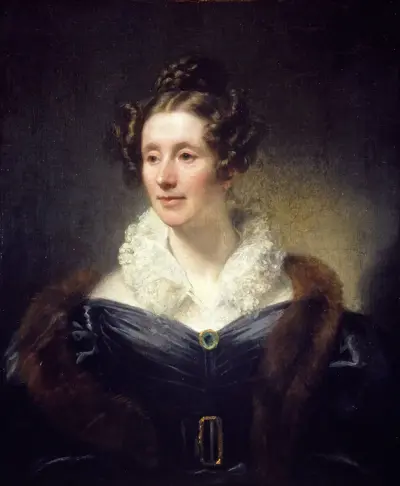
Mary Somer was a Scottish scientist, writer, and polymath. She studied mathematics and astronomy, and was nominated to be jointly the first female member of the Royal Astronomical Society at the same time as Caroline Herschel.
