William H. Seward Quotes
I deem it established, then, that the Constitution does not recognize property in man, but leaves that question, as between the states, to the law of nature and of nations.
Seward, William H. The Works of William H. Seward. Edited by George E. Baker, vol. 1, Redfield, 1853, p. 72.


What makes this quotation so historically interesting is that the abiding by the Supreme Court’s decisions on constitutionality was even an issue. It was because of the terrible Dred Scott decision which required Northern States to return fugitive slaves to their owners despite the constitutions of those states which stated that all men were free. A substantial part of the Democratic Party was the “solid South” and the return of fugitive slaves was one of the major issues of the 1860 Presidential Election. Ironically, the Southern States were arguing AGAINST states’ rights when the Northern States’ laws and Constitutions made fugitive slaves free the minute they set foot in the state.

The Federal Fugitive Slave Act required all in free states to assist owners of escaped slaves to return them to their owners. In 1854 a Missouri slave owner tracked his escaped slave to Wisconsin and the Federal officials incarcerated the slave pending his return. A Wisconsin mob broke the slave out of jail and helped him escape to Canada. Sherman M. Booth, Publisher & Editor of the Wisconsin Free Soil Democrat was convicted under the Fugitive Slave Act for aiding the escape. Smith’s opinion overturned the Fugitive Slave Act on the grounds that it had usurped state’s rights. The Supreme Court overturned Smith’s ruling, but Booth was pardoned. See {587927} & {587928}.
The Pennsylvania Society for promoting the Abolition of Slavery had submitted a petition to Congress which refused to consider it, this resolution being the reason.

In February of 1861, in a last ditch effort to hold the Union together the Senator offered this proposed Constitutional amendment which would not only guarantee the existence of slavery in the South, but would assure that there could be no later Constitutional amendment to do so—the so-called "unamendable amendment." Surprising to us today is the fact that this amendment was not only supported by incoming President Abraham Lincoln, but was passed by the required two-thirds of both houses of Congress. However, before it could be ratified by the States, events overtook the amendment, the South seceded, and the Civil War began.


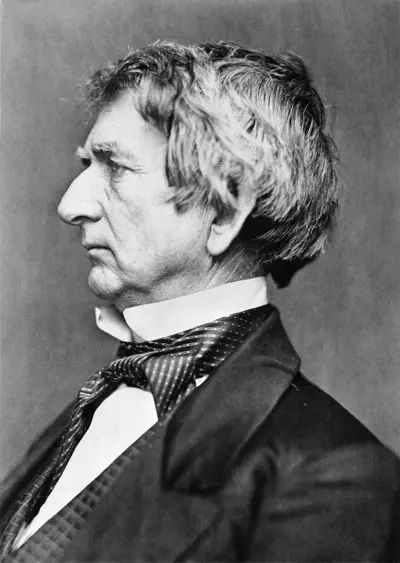
William Henry Seward was United States Secretary of State from 1861 to 1869, and earlier served as governor of New York and as a United States Senator. A determined opponent of the spread of slavery in the years leading up to the American Civil War, he was a prominent figure in the Republican Party in its formative years, and was praised for his work on behalf of the Union as Secretary of State during the Civil War.
