William H. Seward Quotes
But you answer, that the Constitution recognizes property in slaves. It would be sufficient, then, to reply, that this constitutional recognition must be void, because it is repugnant to the law of nature and of nations.
Seward, William H. The Works of William H. Seward. Edited by George E. Baker, vol. 1, Redfield, 1853, p. 71.


Baron Brougham and Vaux


The Federal Fugitive Slave Act required all in free states to assist owners of escaped slaves to return them to their owners. In 1854 a Missouri slave owner tracked his escaped slave to Wisconsin and the Federal officials incarcerated the slave pending his return. A Wisconsin mob broke the slave out of jail and helped him escape to Canada. Sherman M. Booth, Publisher & Editor of the Wisconsin Free Soil Democrat was convicted under the Fugitive Slave Act for aiding the escape. Smith’s opinion overturned the Fugitive Slave Act on the grounds that it had usurped state’s rights. The Supreme Court overturned Smith’s ruling, but Booth was pardoned. See {587926} & {587928}. The more “dread calamity” was civil war which of course came a few years later.


The Mystery was for many years the only Black Newspaper in America.


This was Wesley’s last letter. Wilberforce, a member of Parliament, had been a convert to Methodism and was the leading spokesperson in Parliament for making participation in the slave trade illegal. It would take 16 years of effort before England outlawed participation in the slave trade. Note the distinction commonly made by abolitionists at the time regarding American slavery as the worst of all.

Southerners from the slave states wanted California to be admitted to the Union as a slave state. But a large majority of Californians saw that as a terrible alternative. It was argued that the Southern states would never vote to admit California if it were a free state (see {613404}) and in order to make it clear to the South that admission as a slave state was out of the question, this clause was passed at the Constitutional Convention.
Later changed the name to The Emancipator. Many are surprised that a Southern State would have had such strong abolitionist sentiment so early, but East Tennessee was a hotbed of abolition. See {614117} and {614069}

The first anti-slavery newspaper published in the United States & the first journal in America to advocate immediate, unconditional emancipation
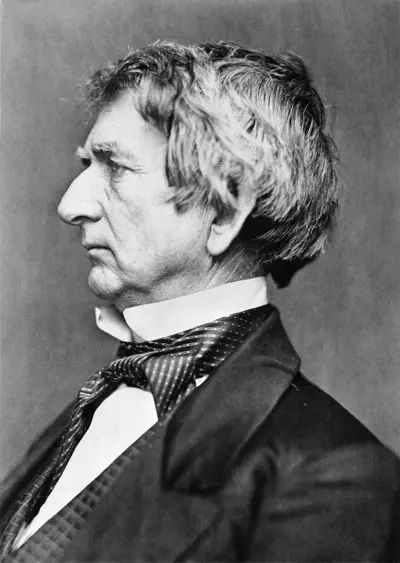
William Henry Seward was United States Secretary of State from 1861 to 1869, and earlier served as governor of New York and as a United States Senator. A determined opponent of the spread of slavery in the years leading up to the American Civil War, he was a prominent figure in the Republican Party in its formative years, and was praised for his work on behalf of the Union as Secretary of State during the Civil War.
