Paul Dana Quotes
He is on the side of the men who are ever day seeking to overthrow the Constitution. He has joined their organizations, espoused their creed, received their leaders at his dwelling and his official residence; and as President of the United States has welcomed their delegates.
Even before the Russian Revolution there was a Red Scare in America based on the writings of Marks and Engels. Labor Unions were automatically viewed by ultra-conservatives as Communistic and revolutionary. Ironically, the greatest offence that the President committed in many eyes was to have labor leaders to the White House for lunch or dinner or, as he did with the coal strike crisis, have labor negotiators in the White House for mediation. The symbolism of accepting these “radicals” as worthy citizens, in some conservative views, elevated the labor movement to a much higher status than they deserved and to treat them with the same dignity and respect as corporate executives was very offensive. Roosevelt had been made an honorary member of the Locomotive Engineers Union, and this enabled the Sun and other critics to say that Roosevelt joined labor organizations.
Paul Dana, 1852-1930, Editor, New York Sun, Editorial castigating President Theodore Roosevelt, July 3, 1904
Sourced by: Eigen's Political and Historical Quotations

This is a notable quotation illustrating the state of relations between the press and the government under Theodore Roosevelt. Baker was one of the most muckraking of the investigative reports. And previously there were no accommodations for the press in government agencies. Roosevelt and most of his reformist appointees believed that public opinion was crucial to achieving their political objectives and that transparency would do them much more good than harm. Roosevelt and his colleagues had so much success with the press, that every administration since has made accommodations for the press and tried to use the press to promote their agenda. Most Presidents did not have the thick skin of Theodore Roosevelt who had been disrespected by some of the press since Abraham Lincoln. See {640476} for an example. Most Presidential administrations wanted the good press but also wanted to control the bad.

Lincoln was the first President who had ever been elected who was overtly and publicly opposed to slavery. As a result of that and other positions Lincoln took, there were many who would have liked to see him assassinated and there were others who talked of seizing the government in Washington before the radical new President could be sworn in and inaugurated. The plot was not carried out however.

She was a nondescript minor functionary in a Tea Party Active Southern County, and her hatred of the Black president was hardly noteworthy. What makes this an important quotation is that it was frequently shown to foreigners who really did not understand the great degree of freedom of speech. Here a public official being paid by the government, not only calls for the removal of a sitting president, but also openly asked the army to rebel against their commander in chief. She was not punished, nor even arrested or tried. She was not even dismissed from her elected government job. That was up to the voters in the next election. There likely is no other country in the world where that can happen.


First Lady Eleanor Roosevelt had more influence and visibility than any other first lady, before or since. She was First Lady for 3+ terms—longer than any other, and in addition to her official duties, she wrote a very popular daily newspaper column. As FDR was handicapped and could not travel much, she traveled all over the nation and the world. She was also very outspoken and no one ever knew whether or not she was speaking with the President’s concurrence or was on her own. She tended to be very liberal—especially in terms of the evils of racial segregation—then legal, and the problems of workers. Her broad influence was very damaging to Southern Segregationist groups and arch Conservative economic groups, who realized that her influence in the change of public opinion was much more effective at changing America than were the socialists and communists who were calling for revolution and were so unappealing that they could easily be attacked. Mrs. Roosevelt was for them more dangerous than Communism.


Warning to John Calhoun and other South Carolinians about the implications of their nullification of the Tariff Act of 1832:

With martial law came the authority to seize ALL guns in the colony for the emergency. This was not to disarm the general populace. It reflected the fact that there were relatively few colonists who owned guns as they were very expensive. The Governor could take those that existed and use them to defend against the rebels or whatever. There were more gun owners in the Revolution but still a minority. Even after the War of 1812 only 30% of Americans were armed, and that shortly decreased to 10% as there was no real culture of gun ownership in early America. This would come around the Civil War.
Only 6 years after the Russian Revolution Lenin was already being perceived as an international provocateur and instigator of problems.

The leaders and their members were organizing Civil Rights protests and demonstrations in keys Southern communities. The Southern segregationists commonly referred to the protesters with these three terms. Hoover hated the Civil Rights organizations and many of their leaders and would not allow FBI agents to assure the safety of the demonstrators when they were beaten and brutalized by the Southern law enforcement officers and KKK members—often one and the same as Hoover knew ({637608}). He used the same terms describing the demonstrators as the Southerners did reflecting his biases and sympathies.
This quotation illustrates a peculiar situation with regard to President Barack Obama. Among some subgroups of the United States, there are people who hate President Obama. And some of them, throughout his Presidency, has described Obama in these obviously false phrases. They manage to hold these false belief’s despite the fact that the refuting evidence is very easy to find. Obama was a very devout Protestant. And his political world view was not communism or Marxism, but middle of the road. He was not even in the left wing of his Democratic Party. However what De Varona and others with these seemingly absurd views discount the data because it is part of a communist conspiracy to plant false information so they can put their man in the White House.

Historically, most of the revolutionary leaders are the sons (and daughters) of upper class and upper middle class parents. They generally have had a good education and are intimately familiar with the foibles of the ruling class.


This was one of the several early unofficial Emancipations that was issued in the Civil War.


He was of course not the President then. But the stands that politicians took with respect to the rebellion of the South often determined their political futures. See {640751} for another future President’s quotation on the subject.
This is another example where our intelligence analysis was totally wrong. It also shows that intelligence being influenced by ideology and politics has a long history in America as elsewhere.

This was his name for the wealthy slaveowners in Tennessee. He was the military governor of Tennessee when he so labeled the secessionists.


McReynolds vehemently dissented with the majority view in Perry v. United States that the government's action was wrong but that the plaintiff was not entitled to relief. His remarks were so vituperative that this, and other, comments, did not appear in the formal record of the court. See {616652} for an even worse private insult of FDR. McReynolds was a virulent ant-Semite and believed that all Backs were inferior to whites and Separate but Equal was fine policy for the nation and he was not sure the “equal” was necessary.

This quotation shows that the dissent leading to the American Revolution did not emerge suddenly in 1776 after the Battle of Bunker Hill. Dissent, sedition and even violence was documented here in 1774. Salem at the time was the second largest port in the colony and the customs tax collectors—Loyalist Americans—were run out of Salem.

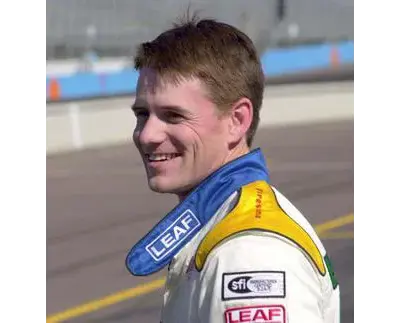
- Born: April 15, 1975
- Died: March 26, 2006
- Nationality: American
- Profession:
