William H. Seward Quotes
It pains me to learn that things are even worse than is understood… A plot is forming to seize the Capitol on or before the 4th of March…
Lincoln was the first President who had ever been elected who was overtly and publicly opposed to slavery. As a result of that and other positions Lincoln took, there were many who would have liked to see him assassinated and there were others who talked of seizing the government in Washington before the radical new President could be sworn in and inaugurated. The plot was not carried out however.
William H. Seward, 1801-1872, Governor of New York (Whig), U.S. Senator (Whig & Republican, NY), U. S. Secretary of State, Letter to Lincoln, December 29, 1860
Sourced by: Eigen's Political and Historical Quotations


This quotation shows that the dissent leading to the American Revolution did not emerge suddenly in 1776 after the Battle of Bunker Hill. Dissent, sedition and even violence was documented here in 1774. Salem at the time was the second largest port in the colony and the customs tax collectors—Loyalist Americans—were run out of Salem.


In the Vietnam War, America and her allies were defending the South Vietnamese from the Communist and Nationalist incursions of the North Vietnamese. However, the South Vietnamese government was itself a very fragile democracy which provided rights little better than the Ho Chi Min lead government of the North. Further, the South Vietnamese rulers and governments while claiming to be democracies, were little more than in name only and were very corrupt. As with many unstable and weak governments, South Vietnam had experienced a succession of coups, with some of his advisors favoring the coups and a few actualy supporting them. Johnson was continually frustrated by this and this expression was his own inimitable style.

In 1993 Mooshood Abiola was the apparent victor in the Nigerian presidential election, but the election was `nullified' by the previous President and military dictator, General Ibrahim Babangida. Abiola announced he would attempt to form a government anyway.


Warning to John Calhoun and other South Carolinians about the implications of their nullification of the Tariff Act of 1832:

He had just assumed his post 6 days earlier. At this point he did not have enough knowledge to favor or oppose the regime change, but he did realize that the decision was a serious one and there would be no turning back. Diem was a creature of the Central Intelligence Agency. An anti-Communist Christian in a Buddhist county, the CIA engineered his rise to power, created his political party, provided him with cash to bribe other Vietnamese politicians, and paid for all the propaganda so he would “win” the Presidential elections. However, he abused the Buddhists, was thoroughly corrupt and ran a corrupt administration, but worst of all from the American point of view, he was unable to motivate the South Vietnamese population to fight the Communists. He reached the point where he was more of a liability, and the Central Intelligence Agency engineered a coup d’etat to remove him from power and replace him with a President more to our liking. (See {634540}.)

He was of course not the President then. But the stands that politicians took with respect to the rebellion of the South often determined their political futures. See {640751} for another future President’s quotation on the subject.


The Posse Comitatus credo called for the execution of tax collectors. See {583355}.

Many Southern Rebels saw themselves as patriots and secession as akin to the Boston Tea Party—the start of a revolution.
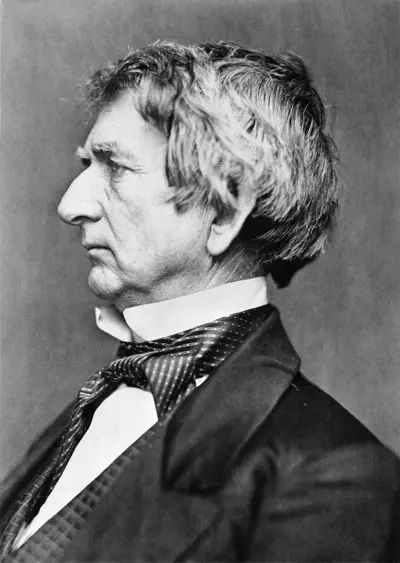
William Henry Seward was United States Secretary of State from 1861 to 1869, and earlier served as governor of New York and as a United States Senator. A determined opponent of the spread of slavery in the years leading up to the American Civil War, he was a prominent figure in the Republican Party in its formative years, and was praised for his work on behalf of the Union as Secretary of State during the Civil War.
