Henry Cabot Lodge Jr. Quotes
We are launched on a course from which there is no turning back: The overthrow of the Diem government.
He had just assumed his post 6 days earlier. At this point he did not have enough knowledge to favor or oppose the regime change, but he did realize that the decision was a serious one and there would be no turning back. Diem was a creature of the Central Intelligence Agency. An anti-Communist Christian in a Buddhist county, the CIA engineered his rise to power, created his political party, provided him with cash to bribe other Vietnamese politicians, and paid for all the propaganda so he would “win” the Presidential elections. However, he abused the Buddhists, was thoroughly corrupt and ran a corrupt administration, but worst of all from the American point of view, he was unable to motivate the South Vietnamese population to fight the Communists. He reached the point where he was more of a liability, and the Central Intelligence Agency engineered a coup d’etat to remove him from power and replace him with a President more to our liking. (See {634540}.)
Henry Cabot Lodge, Jr., 1902-1986, U.S. Senator (Republican, MA), Republican Vice Presidential nominee, Ambassador to Vietnam & Germany, Head of the American delegation to the Paris Peace Conference for Vietnam peace negotiations Top Secret Cable to the State Department, August 29,1963
Sourced by: Eigen's Political and Historical Quotations

To depose President Ngo Dinh Diem of South Vietnam Conein was one of the first American intelligence operatives in Vietnam. Diem was a creature of the Central Intelligence Agency. An anti-Communist Christian in a Buddhist county, the CIA engineered his rise to power, created his political party, provided him with cash to bribe other Vietnamese politicians, and paid for all the propaganda so he would “win” the Presidential elections. However, he abused the Buddhists, was thoroughly corrupt and ran a corrupt administration, but worst of all from the American point of view, he was unable to motivate the South Vietnamese population to fight the Communists. He reached the point where he was more of a liability, and the CIA, through Conein, engineered a coup d’etat to remove him from power and replace him with a President more to our liking. Though not planned that way, the South Vietnam military officers who we backed in the coup, then murdered Diem, who although ineffective and unsuccessful, had been a friend and ally of the United States. Even President Kennedy felt badly about the outcome. See {634539}.

President Ngo Dinh Diem of South Vietnam Diem was a creature of the Central Intelligence Agency. An anti-Communist Christian in a Buddhist county, the CIA engineered his rise to power, created his political party, provided him with cash to bribe other Vietnamese politicians, and paid for all the propaganda so he would “win” the Presidential elections. However, he abused the Buddhists, was thoroughly corrupt and ran a corrupt administration, but worst of all from the American point of view, he was unable to motivate the South Vietnamese population to fight the Communists. He reached the point where he was more of a liability, and the Central Intelligence Agency engineered a coup d’etat to remove him from power and replace him with a President more to our liking. (See {634540}.) Another reason this quotation is important is that it demonstrates the involvement that the Attorney General had with foreign and defense policy. Normally the Attorney General has nothing to do in these areas and is not even in the loop. But Robert F. Kennedy was also the President’s brother, and his advice was sought by President Kennedy on almost all matters. He was probably the most influential attorney general in American history.

In the Vietnam War, America and her allies were defending the South Vietnamese from the Communist and Nationalist incursions of the North Vietnamese. However, the South Vietnamese government was itself a very fragile democracy which provided rights little better than the Ho Chi Min lead government of the North. Further, the South Vietnamese rulers and governments while claiming to be democracies, were little more than in name only and were very corrupt. As with many unstable and weak governments, South Vietnam had experienced a succession of coups, with some of his advisors favoring the coups and a few actualy supporting them. Johnson was continually frustrated by this and this expression was his own inimitable style.


20th century Africa and South America were particularly good examples.


This quotation shows what prompted the Texas rebellion against Mexico. Military dictators had taken over the Federal Government of Mexico and Mexico was no longer a free country.

There was no national uprising. Not a single Cuban came to assist the Bay of Pigs invaders, nor was there even one sabotage action or other revolutionary action anywhere in Cuba. The conviction of the CIA that Castro was hated by the Cubans and the overwhelming majority of Cubans would welcome an invasion was so completely wrong that it was stunning. The assurances the CIA planners had received that there would be an uprising came from Cuban anti-Castro émigrés who were being paid by the CIA to organize the invasion force. They would only continue to get paid if the American authorities felt that there was a very good chance of success so they turned out to have a serious conflict of interest. But the CIA planners had been hearing this from Cuban exiles not involved with the invasion and they had a strong bias that no communist government could be a popular one. It was a great illustration of the fact that experienced professional intelligence analysts and operatives are susceptible to self-delusion and confusing wishful thinking with reality.

even though in this case the objective The State Department, the Defense Department and most important President Kennedy had decided to get rid of Diem. Most of the Central Intelligence Agency thought that this was a very unwise policy, because Diem was a known risk, and the people who would replace him and their talents and policies were unknown. The negatives of Diem—the facts that he, a Christian, was persecuting the majority Buddhists, was totally corrupt, and not a very good leader was less distressful to the CIA than to the President and the other agencies as the intelligence agency frequently not only tolerated “offensive” allies, but actually employed them including war criminals. Another importance of this quotation is that it shows that it was by no means certain that the CIA would always follow the orders of the President and the government policy makers. Colby, who was not the agency director at that time but was the head of the South East Bureau, was one high level official who argued that the policies should always be followed even if they were unwise or foolish. Another importance of this quotation is that it illustrate a common error that administrations are frequently forced to make: making a policy decision to eliminate a problem while not having much of an idea of what the alternative or consequence would be when the policy is implemented. The Syrian Civil War in 2013 was a good example. The Government side appeared to have used Chemical Warfare on Civilians and public opinion demanded that we do something. However, having a no-fly zone or any of the alternatives to prevent (punish) the government for the Chemical Warfare would strengthen the rebel side which was made up of numerous factions—some of which were known Islamic fundamentalist terrorists and jihadists. If the balance of power were tipped toward the rebels, the consequence for the American national interests were unknown—just as the consequence of ousting Diem was unknown and turned out to also be bad and was probably worse.

This coup has been the biggest trauma for the Iranian people in the last centuries. The blowback from it, has soured relationships between America and Iran for decades. Khamenei personally was traumatized by the coup and publicly refers to it quite frequently. Ironically, reasons and policy logic for the CIA orchestration of the coup are even today murky. The desires of the British may well have been the main reason. “Arrogance” is the term Khamenei uses to describe the British-American alliance and their propensity to try and shape the affairs of other nations.


Grant was a new Brigadier General and occupied Paducah

Lincoln was the first President who had ever been elected who was overtly and publicly opposed to slavery. As a result of that and other positions Lincoln took, there were many who would have liked to see him assassinated and there were others who talked of seizing the government in Washington before the radical new President could be sworn in and inaugurated. The plot was not carried out however.
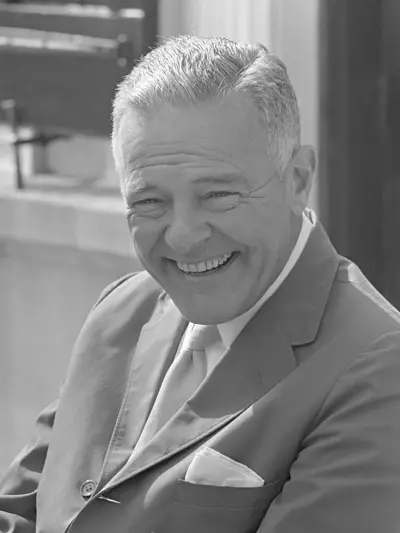
- Born: July 5, 1902
- Died: February 27, 1985
- Nationality: American
- Profession: Politician
Henry Cabot Lodge Jr. was a Republican United States senator from Massachusetts in both Senate seats in non-consecutive terms of service and a United States ambassador. He was considered as a Presidential running mate, most significantly in 1952 by Dwight Eisenhower. Later, largely due to Eisenhower's advice and encouragement, he ended up being chosen as the Republican nominee for Vice President in the 1960 presidential election alongside incumbent Vice President Richard Nixon. The Republican ticket narrowly lost to Democrats John F. Kennedy and Lyndon B. Johnson. In 1964, Lodge won by a plurality a number of that years‘ party presidential primaries and caucuses on the strength of his name, reputation, and respect among many voters. This effort was encouraged and directed by low-budget but high-impact grassroots campaign by academic and political amateurs.
