Allen Dulles Quotes
As soon as the invasion begins there will be a national uprising.
There was no national uprising. Not a single Cuban came to assist the Bay of Pigs invaders, nor was there even one sabotage action or other revolutionary action anywhere in Cuba. The conviction of the CIA that Castro was hated by the Cubans and the overwhelming majority of Cubans would welcome an invasion was so completely wrong that it was stunning. The assurances the CIA planners had received that there would be an uprising came from Cuban anti-Castro émigrés who were being paid by the CIA to organize the invasion force. They would only continue to get paid if the American authorities felt that there was a very good chance of success so they turned out to have a serious conflict of interest. But the CIA planners had been hearing this from Cuban exiles not involved with the invasion and they had a strong bias that no communist government could be a popular one. It was a great illustration of the fact that experienced professional intelligence analysts and operatives are susceptible to self-delusion and confusing wishful thinking with reality.
Allen Welsh Dulles, 1893-1969, Director of the CIA, Statement to President John F. Kennedy, and his key staff at a secret briefing on the CIA planned covert initiative—The Bay of Pigs, 1961, Quoted by John Seigenthaler, one of the meeting participants, PBS, John F. Kennedy November 12, 2013
Sourced by: Eigen's Political and Historical Quotations


Kennedy was a relatively new president and the Bay of Pigs Operation was prepared and planned by the CIA under the Eisenhower Administration. The president assumed that the intelligence was correct and there would be an uprising of the Cuban people when as soon as the landing took place. That was all wrong and the Cubans actually supported Castro and the operation was a disaster. Kennedy never trusted the CIA after that.


This was a training manual for the conduct of Guerrilla wars in general and the Contra insurrection in Nicaragua.

He had just assumed his post 6 days earlier. At this point he did not have enough knowledge to favor or oppose the regime change, but he did realize that the decision was a serious one and there would be no turning back. Diem was a creature of the Central Intelligence Agency. An anti-Communist Christian in a Buddhist county, the CIA engineered his rise to power, created his political party, provided him with cash to bribe other Vietnamese politicians, and paid for all the propaganda so he would “win” the Presidential elections. However, he abused the Buddhists, was thoroughly corrupt and ran a corrupt administration, but worst of all from the American point of view, he was unable to motivate the South Vietnamese population to fight the Communists. He reached the point where he was more of a liability, and the Central Intelligence Agency engineered a coup d’etat to remove him from power and replace him with a President more to our liking. (See {634540}.)


Bush followed a tradition of American opposition to conquest. See Henry L. Stimson’s statement on the Japanese invasion of Manchuria.


This quotation shows that the dissent leading to the American Revolution did not emerge suddenly in 1776 after the Battle of Bunker Hill. Dissent, sedition and even violence was documented here in 1774. Salem at the time was the second largest port in the colony and the customs tax collectors—Loyalist Americans—were run out of Salem.


Vladimir Lenin. This galvanized the October Revolution which put the Bolsheviks in power ousting the Kerensky government.


This was the group that decided who was to be executed in the Reign of Terror


Thai society had been polarized and very large peaceful demonstrations (by the Yellow Shirts) were calling for the resignation of the government which although very corrupt and controlled by a single very rich family which had extensive support of the rural and poor (the Red Shirts). This quotation illustrates how a peaceful protest could lead to violence and terrorism. This Red Shirt leader, rather than lose, would lead violence in the streets like the Brown Shirts of the pre WWII Germany. If the violence fails, he was willing to go underground and become a terrorist movement.
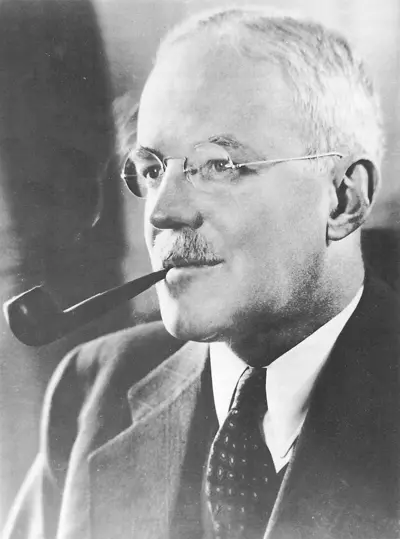
Allen Welsh Dulles was the first civilian Director of Central Intelligence (DCI), and its longest-serving director to date. As head of the Central Intelligence Agency (CIA) during the early Cold War, he oversaw the 1953 Iranian coup d'état, the 1954 Guatemalan coup d'état, the Lockheed U-2 aircraft program, the Project MKUltra mind control program and the Bay of Pigs Invasion. He was fired by John F. Kennedy over the latter fiasco.
