Jean Racine Quotes
Have there ever been more submissive slaves? Adoring, even in their irons, the God who punishes them.
Racine, Jean. Esther. Denys Thierry, 1689, Act 3, Scene 4.


In Russia at the time, serfs were little better off than slaves. Not only did they have to obey their landlords in all things, but any who advocated disobedience on their part were beaten and sent to Siberia. Exile to the Siberian Gulags was not an invention of the Communists of the 20th century although they used that punishment in unprecedented numbers. It was used by the Czars and the Empress.

Gordon himself was killed shortly thereafter by the Madhi’s followers at the siege of Khartoum. Ahmed died soon thereafter. Although Ahmed was an extreme religious fanatic, and a skillful leader, he was not a terrorist.


Miller was the first Black American admitted to a Graduate Program—Johns Hopkins—in Mathematics


The Catholic Papacy was very ambivalent regarding the morality of slavery. Callistus, in effect authorized the morality of enslaving “infidels.” In the past this was a reaction to the Muslim ethic of banning slavery of Muslims but allowing it for “infidels.” This bull has been used to defend slavery ever since despite the fact that there are several other (before and after) Papal pronouncements condemning slavery. See {617550} , {617880} , {617632}

Conceptually this is one of the most absurd documents in history, written by a European King to the native Indians of the new world, virtually all of whom were illiterate, knew nothing of Christianity or of European politics.

This statement was made long after slavery had been abolished and Jim Crow was on the rise in the South.


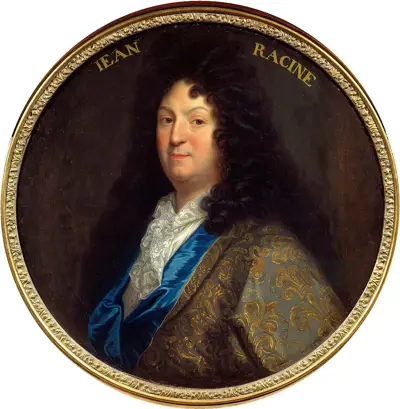
Jean Racine (/ræˈsiːn/ rass-EEN, US also /rəˈsiːn/ rə-SEEN), baptized Jean-Baptiste Racine, was a French dramatist, one of the three great playwrights of 17th-century France, along with Molière and Corneille, and an important literary figure in the Western tradition. Racine was primarily a tragedian, producing such "examples of neoclassical perfection" as Phèdre, Andromaque, and Athalie. He did write one comedy, Les Plaideurs, and a muted tragedy, Esther for the young.
