Ferdinand of Aragon Quotes
Therefore, we request that you understand this text, deliberate on its contents within a reasonable time, and recognize the Church and its highest priest, the Pope, as rulers of the universe, and in their name the King and Queen of Spain as rulers of this land, allowing the religious fathers to preach our holy Faith to you.….Should you fail to comply, or delay maliciously in so doing, we assure you that with the help of God we shall use force against you, declaring war upon you from all sides and with all possible means, and we shall bind you to the yoke of the Church and of Their Highnesses; we shall enslave your persons, wives and sons, sell you or dispose of you as the King sees fit; we shall seize your possessions and harm you as much as we can as disobedient and resisting vassals.
Conceptually this is one of the most absurd documents in history, written by a European King to the native Indians of the new world, virtually all of whom were illiterate, knew nothing of Christianity or of European politics.
Ferdinand of Aragon, 1452-1516, King of Spain, Letter to the Taino/Arawak Indians, ~1500
Sourced by: Eigen's Political and Historical Quotations

Also known as Ferdinand II or Aragon. We have provided an extensive quotation from the letter. In retrospect, it is incredulous today that Ferdinand would make such demands or even would believe that the Indians would understand the terms or their consequences, the threats. Even the promises that are made were ignored because of the Indian’s “intransigence.”

Juan Lopez de Vivero. This document was a written declaration of sovereignty and war, read by Spanish military forces to assert their sovereignty (a dominating control ) over the Americas and their peoples. He issued it on “behalf of the King, Don Fernando, and of Doña Juana I, his daughter, Queen of Castille. and León”. It was read to the native peoples of the New World in Spanish which they did not understand and then were held to it on penalty of death thereafter. It was the legal and philosophical foundation for the worst example of colonial abuse in history.


The moral imperative of submission rather than allowing a war started by the aggressor, logical for Pizarro and Church leaders of the time, is the same logic of aggressors from Adolf Hitler to Saddam Hussein.


Just like Spain and Persia, the Arabs by fighting lost not only more land, but also lost the respect of most of the non-Muslim War. The conscious decision to choose an irrational strategy that would cause loss of life, land and respect has none-the-less repeatedly been chosen by the Arab culture. much to its detriment. Azzam is one of the few Arabs to admit this to the non-Islamic World.

For another version see Shakespeare {47041}, Bulwer-Lytton {114805}, and Hogben {624057}

This is one of the best examples of the Mongol Terror Tactics. They had a completely mobile fighting force. They could evade any large army and attack fixed towns and villages, while opponents could not defend all the locations without enormous expense. The calculus was often that it was cheaper to pay the Mongols tribute than it was to even beat them in the field. In this case, the Hungarians settled and a Mongol satellite group—the Cumans (Western Kipchaks)—moved into Hungary and have been a minority there ever since.

That is exactly what happened. The Spanish raped and interbred with the native women in the Americas and it was their offspring who ended up dominating South and Central American societies.

The Catholic Papacy was very ambivalent regarding the morality of slavery. Callistus, in effect authorized the morality of enslaving “infidels.” In the past this was a reaction to the Muslim ethic of banning slavery of Muslims but allowing it for “infidels.” This bull has been used to defend slavery ever since despite the fact that there are several other (before and after) Papal pronouncements condemning slavery. See {617550} , {617880} , {617632}


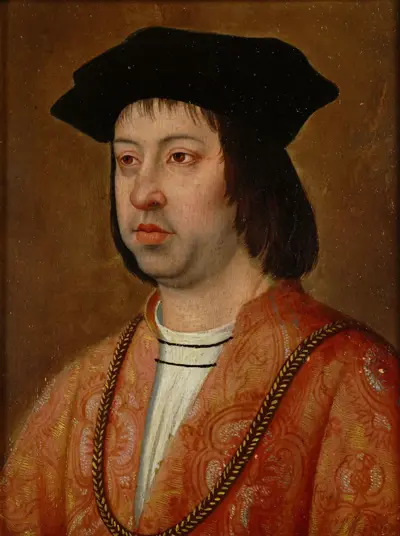
Ferdinand II was King of Aragon from 1479 to his death. As the husband of Queen Isabella I of Castile, he was King of Castile from 1474 to 1504 as Ferdinand V. He reigned over a dynastically unified Spain jointly with Isabella; together they are known as the Catholic Monarchs. Ferdinand is considered de facto the first king of Spain, being described as such during his own lifetime, although Castile and Aragon remained de jure two different kingdoms until the Nueva Planta decrees of 1707 to 1716.
