Callistus III Quotes
You are authorized to reduce to servitude all infidel people.
The Catholic Papacy was very ambivalent regarding the morality of slavery. Callistus, in effect authorized the morality of enslaving “infidels.” In the past this was a reaction to the Muslim ethic of banning slavery of Muslims but allowing it for “infidels.” This bull has been used to defend slavery ever since despite the fact that there are several other (before and after) Papal pronouncements condemning slavery. See {617550} , {617880} , {617632}
Callistus III, 1378-1458, Roman Catholic Pope, Papal Bull, 1455, 1458
Sourced by: Eigen's Political and Historical Quotations

In this case, the Pope was obeyed on the issue of slavery. However, Papal injunctions against slavery have not always had the desired effect. See {617632}

One might think that this remarkable pronouncement would have put an end to Catholic participation and support of slavery. However, in an exercise of theological hair splitting, the Southern Catholic Bishops of the United States took the position that In Supremo outlawed Catholic participation and support of slave trading but not the institution of slavery itself. See {617544} for their official position to the United States Government.

The “enemy of the human race” is the Devil, Note that the Pope labels as “allies” of the Devil those who advocate and participate in slavery. Slavery was not only immoral, but the Devil was behind it all. The fact that slavery persisted on a massive scale by Catholic countries illustrates that while the Pope was a powerful leaders and figure, even he could not influence all the “sinners.”


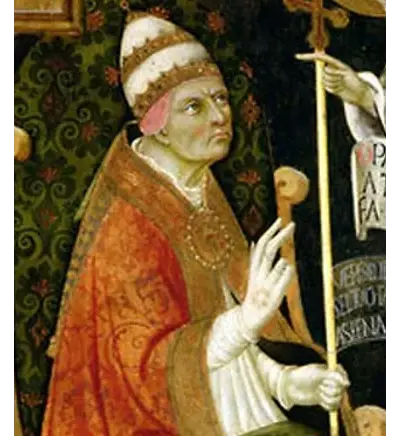
Pope Callixtus III, born Alfonso de Borgia (Valencian: Alfons de Borja), was head of the Catholic Church and ruler of the Papal States from 8 April 1455 to his death. Borgia spent his early career as a professor of law at the University of Lleida; he later served as a diplomat for the kings of Aragon. He became a tutor for King Alfonso V's illegitimate son Ferdinand. After arranging a reconciliation between Alfonso and Pope Martin V, Borgia was made Bishop of Valencia. In 1444, Pope Eugene IV named him a cardinal, and Borgia became a member of the Roman Curia. During the siege of Belgrade (1456), Callixtus initiated the custom that bells be rung at midday to remind the faithful to pray for the crusaders. The tradition of the Angelus noon bell still exists in most Catholic Churches to this day. He was also responsible for the retrial of Joan of Arc that saw her vindicated. He appointed two nephews as cardinals, one of whom became Pope Alexander VI.
