Manu Quotes
There are slaves of seven kinds, (viz.) he who is made a captive under a standard, he who serves for his daily food, he who is born in the house, he who is bought and he who is given, he who is inherited from ancestors, and he who is enslaved by way of punishment.
Manava Dharma Shastra. This text is a part of the Hindu Holy Texts. Hindus believe that Manu was a prophet whose text is revealed or inspired.
Manu, ~ 500 BC, Hindu Teacher from India, Laws of Manu
Sourced by: Eigen's Political and Historical Quotations


The Catholic Papacy was very ambivalent regarding the morality of slavery. Callistus, in effect authorized the morality of enslaving “infidels.” In the past this was a reaction to the Muslim ethic of banning slavery of Muslims but allowing it for “infidels.” This bull has been used to defend slavery ever since despite the fact that there are several other (before and after) Papal pronouncements condemning slavery. See {617550} , {617880} , {617632}

In this case, the Pope was obeyed on the issue of slavery. However, Papal injunctions against slavery have not always had the desired effect. See {617632}


There was little thought of emancipating slaves or their value to the South by the senior officers of the Union Army at the beginning of the war. The Secretary of War however changed that. See {629184}.


American Communist Party newspaper. National Recovery Administration. The NRA was one of the key provision of FDR’s New Deal. The American right saw the program as Communist and left wing, while the Communists distrusted it as being right wing as this quotation illustrates. See also {46137}. The Supreme Court found the program unconstitutional ending this bizarre political debate. FDR was often attacked by both ends of the political spectrum but retained the support of a large coalition in the middle.

John Sutter was an immigrant to California from Switzerland where he became a Mexican citizen. Slavery was outlawed in Mexico and its territories, yet Sutter and others maintained Indians as slaves. The Roman Catholic Missions of California also kept Indian slaves. This quotation is historically important because many people never realized that slavery was prevalent in California.


This was the an early history of the brutal 1298 Muslim Invasion of Gujarat a large state of India that was then Hindu. The Islamic Armies spread out from the Middle East and converted a large proportion of the worlds people to Islam. Force or “conversion by the sword” was one of the tools, but millions of people welcomed Islam and saw it as a great modernizing force for the dignity and equality of people—especially in Hindu India where the caste system made all inferior to the Brahmins and the lowest cast literally “untouchables.”


He was making a generalization based on his historical study of nations and societies.

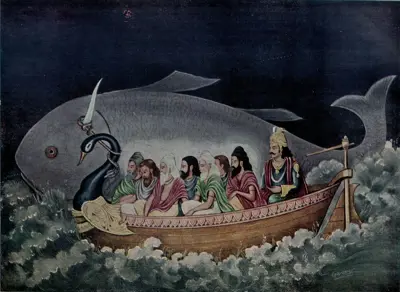
Manu (Sanskrit: मनु) is a term found with various meanings in Hinduism. In early texts, it refers to the archetypal man, or to the first man (progenitor of humanity). The Sanskrit term for 'human', मानव (IAST: mānava) means 'of Manu' or 'children of Manu'. In later texts, Manu is the title or name of fourteen mystical Kshatriya rulers of earth, or alternatively as the head of mythical dynasties that begin with each cyclic kalpa (aeon) when the universe is born anew. The title of the text Manusmriti uses this term as a prefix, but refers to the first Manu – Svayambhuva, the spiritual son of Brahma.
