Pankaj Mishra Quotes
Future historians may well see such uncoordinated mayhem as commencing the third — and the longest and strangest — of all world wars, one that approximates, in its ubiquity, a global civil war.
Pankaj Mishra, "Age of Anger: A History of the Present" , Farrar, Straus and Giroux, 2017
Sourced by: Eigen's Political and Historical Quotations


Indeed the Arabs did invite the Russians in but neither India nor Pakistan did.

Peruvian Revolutionary Group. This speech was made from prison.

At this point, there had hardly been any fighting and no outrages or war crimes were yet committed by either side. These would come later—more on the Confederate side as they did not want to take the limited resources they had from their troops to fulfil abstract obligations to prisoners of war or to civilians. A few deliberately chose to use terror tactics. The Union troops also at various points in the war got out of hand and looted personal property of civilians. But at this point, this proclamation was just lies and propaganda.


It is often said that “elections have consequences”. The 1960 election was one that certainly had profound consequences. Lincoln was unwilling to force the Northern states to return fugitive slaves against the constitution, laws and will of the people of those states as Buchanan said he was (but had a hard time doing). Also Lincoln was unwilling to allow new territories to enter the union if they allowed slavery. In the end, most pro Slavery politicians realized that with the greater growth rate of the North, they Southern disproportionate power in the Congress was doomed as would be the institution of slavery itself. Crittendon a strong Unionist from a border state, understood the implication of Lincoln’s election for the Union.

This was before secession and “Confederacy” as Lincoln was using the term referred to the Confederacy or the original 13 states and the territories that joined the Union thereafter.

The Confederate Civilian & Military Authorities in the Confederate Capital were grossly insensitive to the perceptions and opinions of the women of the South. This statement was a classic example. It also indicates the terribly serious plight the Confederacy was in at the time. Just as the leadership deluded themselves into thinking that the women of Richmond would riot and loot for “license ” and not for shortage and want of necessities, they did not face the reality of their strategic military situation.

He was Chancellor of the Exchequer at the time of this speech. Gladstone was certain about most of his views on foreign policy but correct on only some with many blunders on his watch. This view was very important for the Confederacy as it was a prerequisite to diplomatic recognition. The latter never came.

At the beginning of the Civil War, Lincoln and many of the Union politicians hoped that the South would “come to its senses” and end the rebellion. As a result, they did not want to take all the draconian steps that they were able to. They wanted to give the Southern moderates room to maneuver and persuade the firebrands. However, there was a fundamental issue at stake—slavery—where there was no real compromise left that would have any lasting effect. The slaveholders would be destroyed in their view—possibly by the war, but certainly in the Union where the majority was strongly opposed to slavery on moral grounds.

Sherman was one of the few military leaders who tended to always get good press coverage and who did not develop good relations with the newsmen. He tended to excoriate them although at a personal level he made a disctinction between the worst and the best.

Many historians argue that at this point the Confederacy was beaten and had they then surrendered everyone would have been much better off. But Davis and other Southern leaders, with their ideological and twisted moral logic dragged the war on for two more years and much of the South was destroyed making things even harder for the Southerners during Reconstruction.

There was some fear in the North that the shots fired by the Southern rebels, might encourage one or more of the European Powers to start a war with the United States. And if the Rebellion turned into a full scale Civil War, the South would surely encourage such acts be promising trade concessions in the export of Southern cotton. Seward’s confident and bellicose statement distressed some Union colleagues who feared that Seward might anger and provoke one of more of the machismo and nationalistic European Powers. However, if Seward was bluffing, the bluff worked. No country encroached on American interests during the Civil War. If he was not bluffing, he certainly, along with many others, understated the difficulty that the North would have putting down the Southern rebellion.


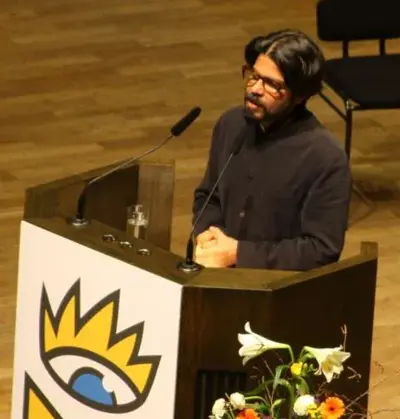
Pankaj Mishra is an Indian essayist and novelist and a recipient of the 2014 Windham–Campbell Prize for non-fiction.
