Josiah Gorgas Quotes
Yesterday a crowd of women assembled on the public square and marching thence down Main, sacked several shoe, grocery and other stores. Their pretense was bread; but their motive really was license. Few of them have really felt want. The President went down amongst them and said a few words to them telling them that the course they were pursuing was the one most likely to bring scarcity of food on the city.... It was a real women’s riot, but as yet there is really little cause for one—there is scarcity, but little want.
The Confederate Civilian & Military Authorities in the Confederate Capital were grossly insensitive to the perceptions and opinions of the women of the South. This statement was a classic example. It also indicates the terribly serious plight the Confederacy was in at the time. Just as the leadership deluded themselves into thinking that the women of Richmond would riot and loot for “license ” and not for shortage and want of necessities, they did not face the reality of their strategic military situation.
Josiah Gorgas, 1818–1883, Civil War Confederate General & Chief of Ordnance, President of the University of Alabama, Reaction to a Richmond Women’s Bread Riot Complete with Looting, April 3, 1863
Sourced by: Eigen's Political and Historical Quotations


This quote is often cited to imply that Luther endorsed rioting which is not the case. See the related quotes from the same speech for the larger context of the quote which makes clear Luther’s true views of the unproductiveness and destructiveness of rioting.

Lincoln had instituted the first draft in American History and it was terribly resented by many Americans. The draft laws allowed the wealthy and upper middle class to avoid service by paying a $300 fee of hiring a substitute just like in the Vietnam War the upper classes could get College Draft deferments. The mob led mostly by poor Irish, began by protesting the draft; then they attacked the mansions and houses of the wealthy; and then they went after Blacks. The Irish poor feared large numbers of Negroes coming out of slavery and competing for their jobs and lowering the prevailing wages. Blacks were beaten and lynched and 5,000 almost half of the then Negro population were driven to Brooklyn, New Jersey and the New York suburbs. It was the worst riot in United States History.

This general perception led the Founding Fathers to place profound restrictions on the allowable role of the military in national law enforcement—a condition that exists to this day.


He had just spent 15 months in Italy and did not admire Italian symphonic abilities. The English Chartists wanted to organize demonstrations and protests but had little experience and know how.

J. Edgar Hoover, the racist FBI Director, and the Chief of Police of the all white Washington DC Police Force, had made phone calls and sent memos to as many important people they could reach, warning that there was bound to be violence if 100,00 militant Blacks tried to march on Washington. There were twice that number planned for by Bayard Rustin, the man in charge of the March planning, but 250,000 showed up. There were very few incidents and no injuries and deaths as a result of some brilliant planning by Rustin and the cooperation of Attorney General Robert F. Kennedy—the President’s brother—with Rustin. However, the fear spread by Hoover and others caused the major league baseball games to be cancelled, liquor stores to be closed, stores and offices throughout the city were intimidated and closed. But it was one of the best organized and peaceful social/political demonstrations in history.

There was a large contingent of whites who showed up—many invited and expected and many who came on their own.

Historically, this quotation shows the desperate condition of the 1863 food supply in the Confederacy. The most profitable crops were cotton and tobacco. However, Davis and other Southern leaders had to urge patriotic Southerners to abandon those crops in favor of foodstuffs and fodder for the military and their horses. Some did but many did not.

The Police Commissioner had earlier given the green light to the police to use their clubs brutally and indiscriminately {626665} and afterwards made a statement that has been quoted ever since as he justified violating the Constitution because of their political views—see {626664}.


He was arguing that the government should be able to prohibit public demonstrations on the grounds that the protesters are “irresponsible power.” This position has been taken sometimes by the American right, and is common in all totalitarian states.

He was then the Home Secretary and his guidance and restraint was to avoid overreaction. The magistrates however did not act with great restraint over a series of demonstrations which culminated in 11 deaths in The Peterloo Massacre,

Most of the Southern racist members of Congress really did see any demonstration for civil rights as a threat—a threat to the Southern white way of life. And the threat was that most fair minded Americans would be exposed to the evils of segregation and pass Civil Rights legislation. Most of the other members of Congress totally rejected this explanation of why the legislation was being debated. See {637396} .


This absurd statement was made in the midst of the huge Black protests against the Apartheid regime. It was very similar to what the Southern racist, segregationist politicians of the American South used to say about the Southern Negroes who in their view were only unhappy when the “communist outsiders” talk to the them and incite them.

Two protesters were killed. The demonstration so affected the government that they pressured the Belfast local authorities to announce substantial increases in relief. The economy and the employment picture got no better that year.


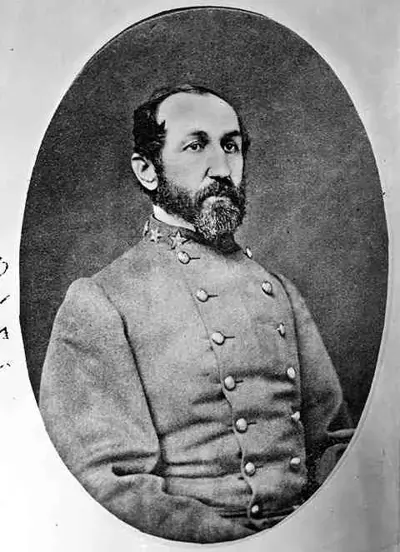
Josiah Gorgas was one of the few Northern-born Confederate generals and was later president of the University of Alabama.
