John Adams Quotes
Soldiers quartered in a populous town will always occasion two mobs where they prevent one. They are wretched conservators of the peace.
This general perception led the Founding Fathers to place profound restrictions on the allowable role of the military in national law enforcement—a condition that exists to this day.
John Adams, 1735-1826, 2nd President of the United States (Federalist, MA), Statement to the jury while defending soldiers who had fired on a mob, December 3, 1770
Sourced by: Eigen's Political and Historical Quotations


After the report was produced someone had handwritten “Draft” on it. The technique of using government agents to spread disinformation to Americans has always been very controversial. The NYPD claims that despite this report, it is the policy of the department not to allow officers to disseminate disinformation. See {589484}. He did not say that civilian agents or paid informants did not do it for the department.
In earlier years it was common practice to use undercover agents to hand out disinformation pamphlets and false rumors to confuse and diffuse crowds gathering for demonstrations. The policy was abandoned. In 2006 a September 11 report surfaced {589485} where the practice had been recommended to be resurrected. The official spokesman denied that it had, but worded the denial in a way that led many to believe that the practice had been resumed. Note that he did not say that non-police officers did not do this for the police department. That left the door open for non police officer agents of the department to spread disinformation at the behest of the police department. It employed thousands of civilian, non officer personnel, and always had many paid informants and agents.


There is a , romantic American myth about the Militiamen in Colonial and Revolutionary America—the citizen soldiers who would leave their farms and rise to the military necessity of the day. However, not only were the militia very hard to muster to duty, but most actually didn’t own or have experience with firearms, and the prevailing opinion of knowledgeable military leaders from George Washington on down was that the militia were not very good soldiers. See {613015}, {613016}, {613022}, {613027}, {621987}, {621988}, {613030}, {613033}, & {613056}

The Confederate Civilian & Military Authorities in the Confederate Capital were grossly insensitive to the perceptions and opinions of the women of the South. This statement was a classic example. It also indicates the terribly serious plight the Confederacy was in at the time. Just as the leadership deluded themselves into thinking that the women of Richmond would riot and loot for “license ” and not for shortage and want of necessities, they did not face the reality of their strategic military situation.


Two protesters were killed. The demonstration so affected the government that they pressured the Belfast local authorities to announce substantial increases in relief. The economy and the employment picture got no better that year.

This proclamation was obviously unconstitutional, but at the time no one challenged it in the courts. It is yet another example, where in an emergency, executive officers of government tend to over-reach and expand their power and authority using the necessity of the emergency as the justification. This case was particularly ironic in that the mayor, so concerned with law and order that he would summarily kill people suspected of looting, was indicted and convicted for corruption the following year. His jail time was limited by a successful court appeal, and he then lost as a mayoralty candidate, but did finally get elected to the San Francisco City Council. Of course, had he been shot when first suspected of his crime—as he proscribed for others--he would never have had the opportunity to appeal and be acquitted.

The founding fathers antipathy to standing armies had an historical basis, even in England.


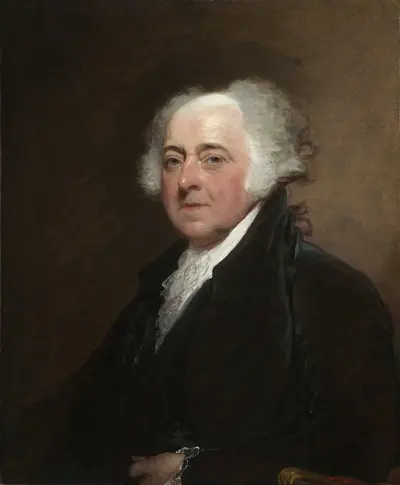
John Adams Jr. was an American statesman, attorney, diplomat, writer, and Founding Father who served as the second president of the United States from 1797 to 1801. Before his presidency, he was a leader of the American Revolution that achieved independence from Great Britain, and he served as the first vice president of the United States. Adams was a dedicated diarist and regularly corresponded with many important figures in early American history, including his wife and adviser Abigail Adams and Thomas Jefferson.
