Henry Charles Carey Quotes
From that date the abandonment of the older State proceeded with a rapidity never before known, and with it grew the domestic slave trade and the pro-slavery feeling.


The slavery issue was the dominant issue in pre-Civil War America. It even drove foreign policy.


Many people are surprised that such an anti-slavery could have passed given the Southern states’ position regarding slavery. However, this resolution did not end slavery—just American participation in the slave trade. This would have actually increased the value of the existing slaves in the colonies as “cheap imports” would no longer depress the value of American slaves. The Southern perception was there were enough slaves for their needs and they could breed more. The other states, generally opposing slavery took what they could get---a ban on the slave trade. A major economic fact of the time was the vast majority of the slave trade imports were going to the British Colonies in the Caribbean. Cutting off the American slave trade would do much more harm to the economic interests of Britain than the United States where the only people economically hurt would be the Yankee captains and slave traders who were not very popular of politically connected except in Rhode Island.


This treaty shows slaves were a major currency of the times and cultures. The Arab Armies of Egypt and the Nubians with this treaty declared an armistice. The extensive Arab use of Black slaves officially begun at this time, has plagued Africa since. Arab slave traders were the middle men who met the European and American demand for slaves until the 19th century. Even at the millennium the Sudanese civil war between the Arab North and Black South has reflected this resentment and hostility and has involved the Northerner’s enslaving tens of thousands of Black Southerners.

The highest court in New York.

Prior to 1799 it was common for Slave Ship owners to insure their cargo, the life of the slaves. Without such insurance the slave trade was a very risky business. There were cases of captains murdering “difficult” slaves and collecting the insurance on them and the most horrible of all, throwing lots of slaves overboard to avoid arrest by those countries which had outlawed the slave trade, and then collecting insurance on the dead “cargo.” One insurance company simply refused to write insurance on slave ships. See {622020}.

This was a compromise. Most Mexicans wanted immediate emancipation of all slaves. However, Stephen Austin and others desirous of attracting colonists thought that this would inhibit too many American Southerners from immigrating to Texas. Slave enthusiasts wanted no prohibition on slavery. The Mexican Emperor issued this compromise but was soon thereafter overthrown. The law was then repealed by the revolutionary government and emancipation was immediate. However, Austin was able to persuade the junta to keep the law in place for Texas only, and so it was. A similar law was being debated by Congress but the Southerners were able to block it. There were still slaves and slavery in Texas. Four years later {613642} there were more restrictions on slavery.

The first anti-slavery newspaper published in the United States & the first journal in America to advocate immediate, unconditional emancipation

Van Buren was Ambassador to England at the time.
Most of us think the California was not a slave state, but in the early 1850s the California law (such as it was) allowed a slave owner to “sojourn” in California with his property that could include slaves. A number of Southern save owners took slaves to the California gold fields to do mining. There was a great deal of resentment on the part of the other miners and the free labor of the territory. In 1855, slavery in California was abolished.

See the Vermont Constitution for another variant of how slavery was abolished: {616994}
Louisiana to this day has a different legal system from the rest of the United States as it was originally based on the French Napoleonic Code. Most people did not realize that Louisiana had strictures against breaking up families—even with slaves.

A few years later he had a clearer idea of what was to be done. However, the additional factor of the Civil War played a big part in driving his Emancipation Proclamation. See {609360}

The “slaves” were American merchant sailors whose ships had been taken by the Barbary Pirates of Algiers who the Dey controlled. He was actually negotiating and trying to get a high price with this statement. The graphic shows a Barbary pirate ship chasing a merchant galley.

This license was issued for Spain in 1517 shortly after he was crowned. This was the beginning of the Slave Trade where Spain shipped kidnapped Africans as slaves to the West Indies.


depending on the term of the sentence Many criminals in England were sentenced to indentured servitude in America for a number of years depending on the crime.
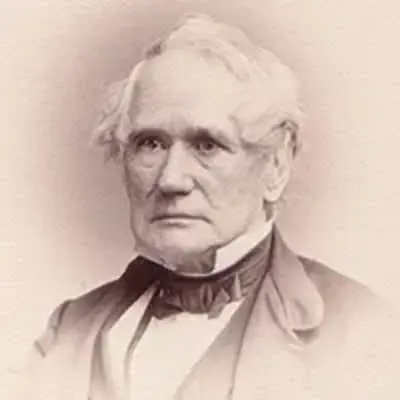
Henry Charles Carey was the leading 19th-century economist of the American School, and chief economic adviser to U.S. President Abraham Lincoln.
