John Stuart Mill Quotes
England has always felt under a certain degree of obligation to bestow on such of her outlying populations as were of her own blood and language, and on some who were not, representative institutions formed in imitation of her own: but until the present generation, she has been on the same bad level with other countries as to the amount of self-government which she allowed them to exercise through the representative institutions that she conceded to them.
John Stuart Mill, 1806-1873, Member of Parliament, British Political Economist, Representative Government, 1861
Sourced by: Eigen's Political and Historical Quotations

5th Earl of Rosebery


He later settled for Home Rule in the Irish Treaty of 1922

Traditional political jurisdictional boundaries were geographic, but in one of the wisest decisions of English Colonial government, it was recognized that dealing with the Indians demanded a much different approach than the classic European extension of the Crown by appointing a Governor for a territory. As Superintendent of Indian Affairs, Johnson, had authority and responsibility for the Indians and relations with the Indians in Massachusetts and the other colonies, the Colonial Governor not withstanding. Bernard and the other Governors of course did not care for Johnson’s authority within his territory.

He was addressing the Conservatives of Ulster, the Northern Ireland province that was the center of the Orangemen movement of Irish Protestants who were fighting to retain 'Protestant Ascendency' -- which was the social, political and cultural domination of the Protestants (the minority) over the Catholics (the majority). This was best achieved by keeping Ireland a part of Great Britain as opposed to having Ireland as a separate, independent country.


Even into the 21st century, the problem was not solved and Muslims from Pakistan continue their futile but tragic terrorist tactics to try and acquire more territory from India." 1st Earl Mountbatten of Burma

Hobson, like Mark Twain in America, was a major critic of imperialism.
Hobson, like Mark Twain in America, was a major critic of imperialism.


Surprisingly, many third world leaders very much desired to become colonies of Great Britain. This letter was not only signed by the King but all the princes as well. The letter languished for more than 3 years in the British Foreign Office without even an answer as British governments vacillated between expansionism and anti-colonialism.


McKinley was then Secretary of War and Taft was Chairman of the Commission on the Philippines.

Given the time, Mill’s view on the colonies were appreciated by few Englishmen, but turned out to be exactly predict the British reality a century later.

He attempted to broker an agreement between India’s Muslims and Hindus as to the form of the successor government.

Even in the early days of our Republic, many people were hostile to the government that they had created, Adams, a politician with a very thin skin, was insulted by the public criticizing the government after having elected it. His concept was that the public should elect their representatives and leaders and then live with what the representatives and leaders do. He in particular came in for much public criticism and insult and even passed laws – the Alien and Sedition Acts – making it illegal to verbally attack the government.


The Chief Secretary, Lord Castleregh, had put forward a resolution to bring about the unification of Great Britain and Ireland under the single British Parliament at Westminster. He and his allies had bribed a number of the Irish MPs to support the union. With Union some Irish MPs would then be able to win seats representing Ireland in the British Parliament. Although Grattan and most of the Orangemen opposed the Union, 4 months later, the bill passed comfortably. Ironically, Grattan was one of the Irish MPs whose popularity won a seat in the unified British Parliament.

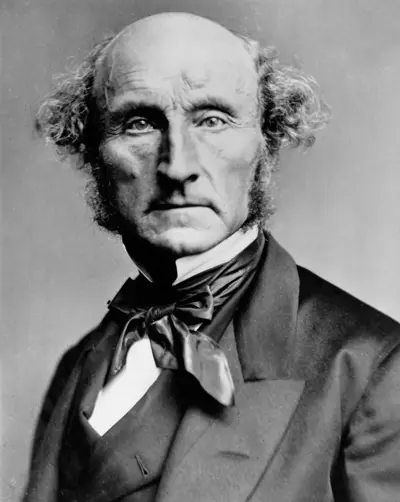
John Stuart Mill, usually cited as J. S. Mill, was an English philosopher, political economist, Member of Parliament, and civil servant. One of the most influential thinkers in the history of classical liberalism, he contributed widely to social theory, political theory, and political economy. Dubbed "the most influential English-speaking philosopher of the nineteenth century", he conceived of liberty as justifying the freedom of the individual in opposition to unlimited state and social control.
