Elihu Root Quotes
The organization of independent nations which has followed the disappearance of the Holy Roman Empire is in the main the outgrowth of that progress in civilization which leads peoples to seek the liberty of local self-government according to their own ideas.
Elihu Root, 1845-1937, U. S. Secretary of War & U. S. Secretary of State, U. S. Senator (Republican, NY), Nobel Laureate in Peace, “A Requisite for the Success of Popular Diplomacy”, Foreign Affairs, September 1922
Sourced by: Eigen's Political and Historical Quotations


In most revolutionary settings leaders have to persuade people who have voted with no success to turn to the rifle. In Ireland at this point, almost all the nationalsits knew that the rifle would help them but they were not sure that a vote would have the effect of a bullet.


Madison was defending the proposed Constitution against a vocal minority who complained that the Federal government would be dominant over the States and the large cities. Madison pointed out that it was people who fought the Revolution and sacrificed for it, not States or political entities. The Constitution was to be for the people, not the existing governmental entities. It was for Americans and not for local politicians. The “State’s Rights faction lost the debate, and the Constitution and Bill of Rights was adopted. That is why this quotation is so important. The slavery enthusiasts, racists, and others have constantly tried to diminish the Federal supremacy even to this day.

At the partition if India into Hindu and Muslim States, what is now Bangladesh, was a part of Pakistan called “East Pakistan” by the Pakistani government. While India became a thriving democracy, Pakistan with its combination of military strongmen and Islamic Fundamentalists did not fare as well and became a very corrupt, undemocratic military nation. East Pakistan was not contiguous with the rest of Pakistan and was culturally quite different and less religiously fundamentalist. While all Pakistanis suffered from poor government, the East Pakistanis fared worse. Finally, they developed their own identity which was suppressed by the military dictators of Pakistan and the Banglas revolted and Bangladesh became and independent nation.


5th Earl of Rosebery

“Esto perpetua” is Latin for “May it be forever”. Ireland had just obtained the right from England to pass their own laws in their own parliament. They were still under English control but now they were like a colony and not under day-to-day control.

While this has been one of the great American principles of political philosophy, in reality we have on many occasions interfered when a people chose an enemy of the United States or made a choice of a government which would seize power and not allow any further free choices. However, from the time JFK made this statement to today, our foreign policy record has become much better on implementing this principle.

The Chief Secretary, Lord Castleregh, had put forward a resolution to bring about the unification of Great Britain and Ireland under the single British Parliament at Westminster. He and his allies had bribed a number of the Irish MPs to support the union. With Union some Irish MPs would then be able to win seats representing Ireland in the British Parliament. Although Grattan and most of the Orangemen opposed the Union, 4 months later, the bill passed comfortably. Ironically, Grattan was one of the Irish MPs whose popularity won a seat in the unified British Parliament.


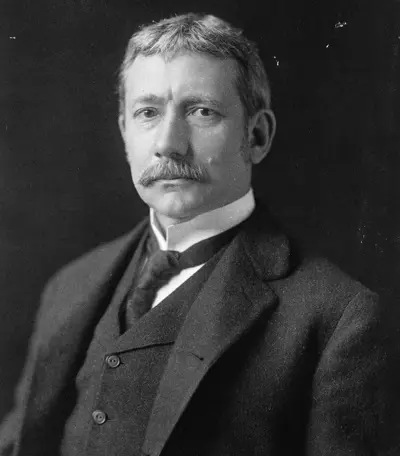
Elihu Root was an American lawyer and statesman who served as Secretary of State under President Theodore Roosevelt and as Secretary of War under Roosevelt and President William McKinley. He moved frequently between high-level appointed government positions in Washington, D.C. and private-sector legal practice in New York City. For that reason, he is sometimes considered to be the prototype of the 20th century political "wise man", advising presidents on a range of foreign and domestic issues. He was elected by the state legislature as a U.S. Senator from New York and served one term, 1909–1915. Root was awarded the Nobel Peace Prize in 1912.
