John A. Hobson Quotes
Imperialism and popular government have nothing in common: they differ in spirit, in policy, in method.
Hobson, like Mark Twain in America, was a major critic of imperialism.
John A. Hobson, 1858–1940, English economist, social scientist & political critic, The Political Significance of Imperialism, Part II: The Politics of Imperialism, Imperialism, A Study, 1902
Sourced by: Eigen's Political and Historical Quotations

Hobson, like Mark Twain in America, was a major critic of imperialism.


This statement became known as "The Truman Doctrine." Truman asked for $400 million to help Greece and Turkey fight stave off armed Communist minorities destabilizing their governments.

That is exactly what happened. However it would not happen until after the Second World War.

Surprisingly, many third world leaders very much desired to become colonies of Great Britain. This letter was not only signed by the King but all the princes as well. The letter languished for more than 3 years in the British Foreign Office without even an answer as British governments vacillated between expansionism and anti-colonialism.

He was addressing the Conservatives of Ulster, the Northern Ireland province that was the center of the Orangemen movement of Irish Protestants who were fighting to retain 'Protestant Ascendency' -- which was the social, political and cultural domination of the Protestants (the minority) over the Catholics (the majority). This was best achieved by keeping Ireland a part of Great Britain as opposed to having Ireland as a separate, independent country.

Chamberlain’s policy was to appease Hitler and Germany to avoid war. Although he did not see Czechoslavkia as a critical British national interest and claimed he had secured peace {585941} , the reality was that he gave Germany room to start its aggression which would engulf all of Europe and much of the world. The British became the only bulwark against Hitler until the Russians stopped the Germans and America entered the war.

The Parliament was debating the reaction to the Stamp Act by the American Colonies. One of the members, reflecting a majority view, asked sarcastically when the American Colonies had been emancipated so that they could make their own independent decisions. Pitt then hit this one out of the park by reversing the question.


British colonial economics imported raw materials to England which then exported them back to the colonies as manufactured goods. Gandhi correctly calculated that by minimizing purchase of English cloth, colonial control of India would not be as profitable. Gandhi not only called for the boycott, but called on Indians to spin their own cloth, set an example be spinning himself, and his Congress party adopted the spinning wheel as its logo and symbol which continues today. Narcotics, was at the time not only legal, but British economic interests controlled much of the world narcotics trade. Gandhi’s call for a boycott of narcotics was as much an economic tactic as it was a health measure.

The British saw the American colonies and the East Coast Canadian provinces all as their North American possessions. With the growing dissatisfaction of the New England and other Colonies, the British wanted to secure Quebec as a safe base where there were few rebels. Fox, of the opposition, criticized the heavy-handed control of Quebec wanting to give the rights of Englishmen under the English Constitution to all citizens of the North American colonies. Had Britain done so, there may never have been an American Revolution.

This statement later became known as “The Truman Doctrine.”


During the Reign of Terror of the French Revolution some powerful Frenchmen in the French Colonies wanted to maintain the caste system to keep the Blacks and other indigenous people from claiming equal rights. They claimed that the colonies would perish. But the French Revolutionaries were committed to “Liberty, Equality, and Fraternity”, and Barnave summed up their viewpoint in this succinct statement of policy which became a memorable quotation.


Given the time, Mill’s view on the colonies were appreciated by few Englishmen, but turned out to be exactly predict the British reality a century later.

Burke was one of the many members of the English Parliament who were opposed to a hard line in America in the beginning of the American Revolution and favored withdrawal after the hostilities began. The hard liners won un England and America was lost.

This quotation is a great demonstration of how much wiser and the better politician of all the crowned heads of Europe that Queen Victoria was. There were stirrings of freedom and desire for parliamentary government throughout Europe. Queen Victoria, even though and perhaps because she was a young woman, had a great feel for fairness and reasonableness and had read a great deal of history. There were some radical red socialists calling for complete radical revolution scaring European Royalty profoundly. They reacted very conservatively and with reaction, reverting to more tyrannical practices of the past urged in that path by very conservative, right wing advisors. Victoria also had little respect for some of the monarchs who had little interest in their people and much with their personal power and wealth. In the end, it was England which was the only nation which never had a serious radical socialist / communist threat, and that had much to do with Victoria’s political acumen and wisdom.

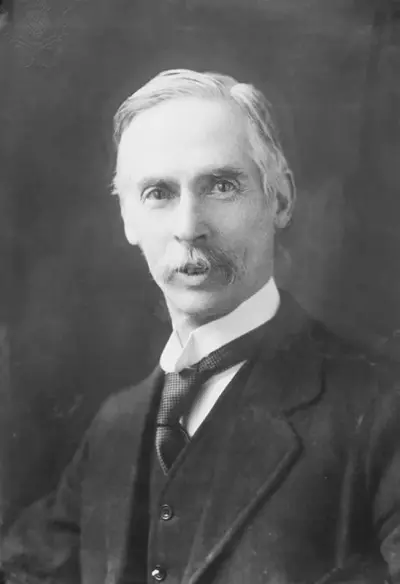
John Atkinson Hobson was an English economist and social scientist. Hobson is best known for his writing on imperialism, which influenced Vladimir Lenin and his theory of underconsumption.
