Francis Bernard Quotes
I do not wish to see a governor within my government
Traditional political jurisdictional boundaries were geographic, but in one of the wisest decisions of English Colonial government, it was recognized that dealing with the Indians demanded a much different approach than the classic European extension of the Crown by appointing a Governor for a territory. As Superintendent of Indian Affairs, Johnson, had authority and responsibility for the Indians and relations with the Indians in Massachusetts and the other colonies, the Colonial Governor not withstanding. Bernard and the other Governors of course did not care for Johnson’s authority within his territory.
Francis Bernard, 1712-1779, Colonial Governor of Jew Jersey & Massachusetts, Objection to the appointment of William Johnson, 1715–1774, as Superintendent of Indian Affairs for the Northern Colonies of British America, Quoted in R. A. Humphreys, “Governor Murray's views on the plan of 1764 for the management of Indian affairs,” Canadian Historical Review 16, 1935
Sourced by: Eigen's Political and Historical Quotations


“Father of American Anthropology”

Lieber is best known because he was assigned by President Lincoln to study the then international laws of war and prepare a manual for the guidance of union troops in the Civil War. Lincoln then issued the document as a general order.

Actually the Iroquois had a very sophisticated system of regular laws and government some of which was incorporated into our Constitution. However, the Iroquois sided with the British in the American Revolution and at its conclusion, most were driven out of their New York lands and became refugees in British Canada. So by 1816, the Iroquois, the most sophisticated, powerful and affluent of all the American Indian tribes were no longer consequential in America.

Although opposed to monarchy himself, Langdon argued that a people had a right to select monarchical government if they chose. See {634001} for Rev. Dan Foster’s similar argument at in that period.

Ironically, many Republican leaders give lip service to decentralized government but they fight hard for centralized national government making. Many want Congress to make laws governing abortion and other family planning techniques. Some want the state to decide, but almost no Republicans want to leave these personal decisions to the local government much less the family and women involved. In business regulation as well, republican fight tooth and nail to have Federal legislation prempt state and local government about tort liability for defective products, and they always prefer that the Federal SEC make all the rules and regulations about selling stocks and bonds and do not want state or local government to “interfere”. Likewise, they have emasculated the state governments when it comes to authority over the state militias where virtually all the controls and promotions are decided by Congress and the Department of Defense and not by Governors or local politicians. Ther are many other examples. In most of the solid Republican Southern States, the local school boards cannot even select the textbooks that schools will use and the Republicans centralize this with the State government and state legislatures which they control. Democrats also are generally opposed to decentralization except for large cities having control along with the Federal government but otherwise they too do not want decentralization. For national political parties, what is the point of winning national elections of the big decisions are made locally?


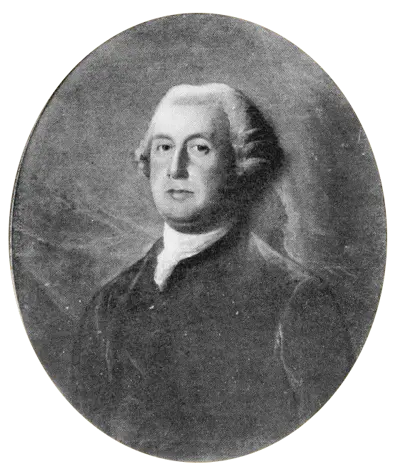
Sir Francis Bernard, 1st Baronet was a British colonial administrator who served as governor of the provinces of New Jersey and Massachusetts Bay. His uncompromising policies and harsh tactics in Massachusetts angered the colonists and were instrumental in the building of broad-based opposition within the province to the rule of Parliament in the events leading to the American Revolution.
