Boris Yeltsin Quotes
Do we need a central government at all?
Boris Yeltsin, 1931-2007, Mayor, Moscow (Russia), President, Russian Republic, Politburo member, Quoted in New York Times Magazine, September 23, 1990
Sourced by: Eigen's Political and Historical Quotations

Not only did the people in Afghanistan have very little experience with central government, but they had little history of government of any sort. There were loose tribes somewhat unified by culture, but there was little or no tribal government. The same with clans. Each Afghanistan male was his own ruler over his wives and children in a family centric society. While virtually all were Muslim, there was no hierarchy or structure of the clergy in that society.


The custom during the civil war was that dead soldiers would be buried in groups by the state they came from. The chaplain, after a particularly bloody battle, has asked if he should separate the bodies by state.


Traditional political jurisdictional boundaries were geographic, but in one of the wisest decisions of English Colonial government, it was recognized that dealing with the Indians demanded a much different approach than the classic European extension of the Crown by appointing a Governor for a territory. As Superintendent of Indian Affairs, Johnson, had authority and responsibility for the Indians and relations with the Indians in Massachusetts and the other colonies, the Colonial Governor not withstanding. Bernard and the other Governors of course did not care for Johnson’s authority within his territory.

There are some who have argued that the United States 20th century of world dominance was an empire. Perhaps so, but it did not have most of the characteristics that Thucydides and most others thought of as characteristics of empire—occupation of nations, rule by the Imperial country, privilege in other nations of the Empire, control. Most important, in historical empires, money—in the form of taxes or goods was commandeered by the Empire for the mother country. The US taxed no one, and money flowed the other way in the most generous sharing of foreign aid in human history. The United States had great influence and was able to exert economic and sometimes military pressure on many nations of the world; American culture was adopted by many nations, but America rarely behaved as Empires historically did.


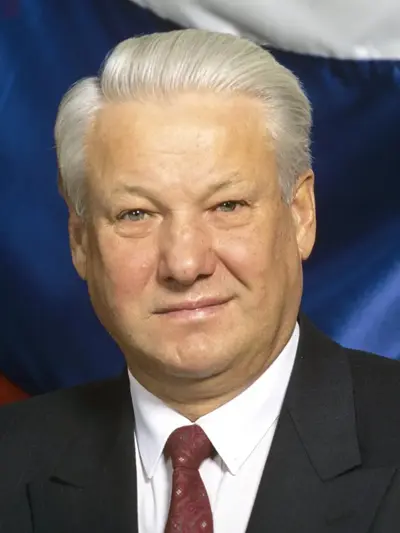
Boris Nikolayevich Yeltsin was a Russian and former Soviet politician who served as the first President of Russia from 1991 to 1999. A member of the Communist Party of the Soviet Union from 1961 to 1990, he later stood as a political independent, during which time he was viewed as being ideologically aligned with conservatism and Russian nationalism.
