Robert E. Lee Quotes
Considering the relation of master and slave, controlled by humane laws and influenced by Christianity and an enlightened public sentiment, as the best that can exist between the white and black races while intermingled as at present in this country, I would deprecate any sudden disturbance of that relation unless it be necessary to avert a greater calamity to both….we must decide whether slavery- shall be extinguished by our enemies and the slaves be used against us, or use them ourselves at the risk of the effects which may be produced upon our social institutions….
Robert E. Lee, 1807-1870, Confederate General-in-Chief, Letter to Senator Hunter, January 11, 1865, [See {52912}.]
Sourced by: Eigen's Political and Historical Quotations

The bill was defeated in the Confederate Senate {590064} so was the last good opportunity for the Confederacy. Lee was totally correct about what the Union would do, and the Northern use of Negro troops from the South was the final nail in the Confederate coffin.

Parker and other escaped slaves in Christiana fought off slave catchers and killed the slave owner leading them. Charged with treason, he escaped to Canada with his family and lived there the rest of his life. While not a polished writer, after he himself had escaped and went to Christiana and leaned to read and write. He wrote this narrative of his life as a slave—one of the few written works we have from slaves.


While England was strongly opposed to slavery, the English textile industry benefited from importing American Southern cotton. So many in England were supportive of the Confederacy.

The Confederates had a strategy of obtaining material assistance, prestige and recognition from England during the civil war. Confederate diplomats reported favorable attitudes of English diplomats. However, Southern leaders were in absolute denial about and insensitive to the revulsion that most of Europe and the sophisticated nations felt about slavery at the time." 1st Viscount Lyons
This quotation is a classic example of the extreme view of slavery that was held by many Southerners. Note the phrase: “as the great God-given guaranty of the freedom of the white man through the thralldom of the black”. The Southern view was that the only way the white can be free is to have the Black as a slave…and this order of things is what God had ordained.

His family was one of the wealthiest in Rhode Island. He called in the entire family and he formally read the deed. The family itself had actually been active in the slave trade under John, his oldest brother, so this deed was very shocking to them. Moses became a leading abolitionist in Rhode Island and John the major defender of slavery in the state. Despite that, the brothers actually remained close.

In early New England the General Court served as both a legislature and a judiciary before separation of powers was introduced. 5 years later the Court banned importing African slaves at all. While slavery was not common in Rhode Island, the laws was not seriously enforced on those who would defy them. It does represent a public anti-slavery sentiment that existed in Early America. It would take 200 years for Rhode Island to finally eliminate all forms of slavery.

It was not uncommon for free Blacks to purchase slaves, marry them and set them free.

The companion bill in the Confederate House, introduced by Barksdale of Mississippi, passed and had the support of Robert E. Lee (see {590135}), and but for Hunter’s opposition there might have been a very different outcome to the Civil War.


The letter was written in the supposed style of a Black after Emancipation and includes most of the ugly false stereotypes of the worst of the racists of the present and the slaveowners of past times. Williams stated that he was not a racist and was trying to make a point about freedom required risk and responsibility. However, the effort was interpreted by many people, Black and white, to be insulting and a put down of African Americans. At the same time, although most of the Tea Party members were not racists, most of the racists in America were supporters of the Tea Party. Those people interpreted the quotation as "telling it like it is" about Blacks who do not want the responsiblities and risks of freedom and are not yet developed sufficiently to be equal citizens in a democracy.

This was the first success that the anti-slavery forces of England had—the recognition and official classification of slaves as humans. After that, it was easier to abolish the slave trade which occurred 16 years thereafter.

Providence, a large shipping center, not only shipped Southern Cotton, but was the home port of some of the major slave traders who brought and sold slaves to the South.


Note the language used for abolitionists in the years leading up to the Civil War. American voters at that time had always lived with the institution of slavery in America and many thought of it as an institutional pillar of the American nation. Those who wanted to bring down an American institution were “fanatics”. Generally this world is used to describe true fanatics and reformers who want to change anything that has been in existence a long while. To paraphrase Edwin Newman, What words shall we use to describe the zealot who wants to destroy the country when every person who wants to improve and change a facet of our system is called a “fanatic.”
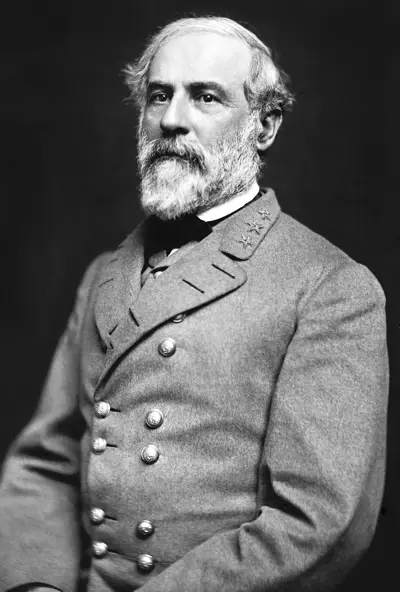
- Born: January 19, 1807
- Died: October 12, 1870
- Nationality: American
- Profession: Soldier
Robert Edward Lee was an American Confederate general best known as a commander of the Confederate States Army during the American Civil War. He led the Army of Northern Virginia from 1862 until its surrender in 1865 and earned a reputation as a skilled tactician.
