Bob Dole Quotes
Congress has a lot of powers which people, especially those in the executive branch, don't like to talk about.
Robert J. Dole, U.S. Senate Minority and Majority Leader (Republican, KS), Republican Presidential Nominee, Interview, ABC This Week, October 24, 1993
Sourced by: Eigen's Political and Historical Quotations


This was the case where the Supreme Court reversed its earlier opinion and declared the Income Tax Unconstitutional.

His role was the equivalent of the Mayor of Washington DC. Even though the Congress had generally been the most powerful branch of the government, public opinion on this was beginning to shift at the turn of the 20th century.


His main reason for believing this is that all appropriations bills must be initiated by the House of Representatives. Lobbyists therefore often give the House more attention than the Senate.

In 1949 the NATO treaty was signed. There was concern that a phrase in the treaty authorizing signatories to take "such action as it deems necessary, including the use of armed force" would undermine Congress's powers:


Contemplating the effect of a Presidential line-item veto:

When the Senate was debating the Gulf of Tonkin Resolution, which would empower the President to take "all necessary measures" to repel any armed attack on U. S. forces, Senator Morse was one of only two Senators opposing the resolution:


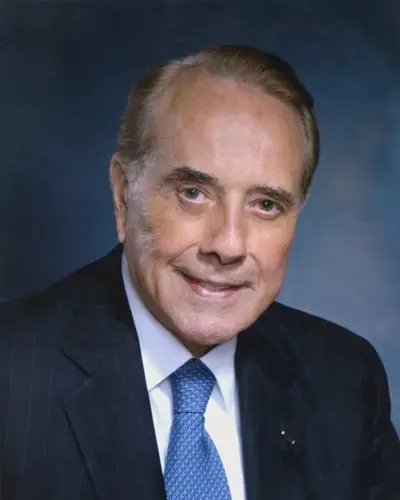
Robert Joseph Dole is an American politician and attorney who represented Kansas in the U.S. Senate from 1969 to 1996. He was the Republican Leader of the United States Senate during the final 11 years of his tenure, including three nonconsecutive years as Senate Majority Leader. Prior to his 27 years in the Senate, he served in the U.S. House of Representatives from 1961 to 1969. Dole was also the Republican presidential nominee in the 1996 election and the vice presidential nominee in the 1976 election.
