Henry W. Davis Quotes
Congress has a constitutional right to an authoritative voice in declaring and proscribing the foreign policy of the United States ... and it is the constitutional duty of the President to respect that policy ...
Henry W. Davis, 1817-1865, U. S. Congressman (American Party & Unconditional Unionist, MD), Chairman, House Committee on Foreign Affairs, House resolution passed overwhelmingly on December 21, 1865
Sourced by: Eigen's Political and Historical Quotations


This notion seems to have first been expressed by Edward S. Corwin in 1940


From this quotation, {624648} and {615902} it is clear that the framers of the Constitution intended the treaty making powers to be shared by the President and the Senate. In practice, in modern times treaties are usually initially negotiated by diplomats under the supervision of the President and the Senate gets to concur or not in the ratification process. However, there have been a number of treaty failures including the League of Nations where the lack of coordination has resulted in a situation where the Senate had to accept or reject something which the President had negotiated and the Senate rejected the treaty.

His main reason for believing this is that all appropriations bills must be initiated by the House of Representatives. Lobbyists therefore often give the House more attention than the Senate.


When the Senate was debating the Gulf of Tonkin Resolution, which would empower the President to take "all necessary measures" to repel any armed attack on U. S. forces, Senator Morse was one of only two Senators opposing the resolution:


The naval hero was approached as to his reception to a presidential draft. His famous response eliminated most interest in him. If Congress selected the President, he may well have won.
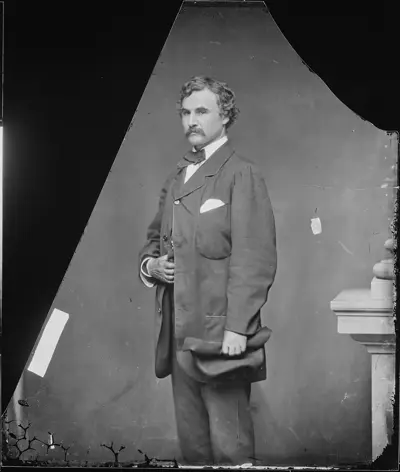
Henry Winter Davis was a United States Representative from the 4th and 3rd congressional districts of Maryland, well known as one of the Radical Republicans during the Civil War. He was the driving force behind the abolition of slavery in Maryland in 1864.
