Margaret MacMillan Quotes
By the start of August 1914, it was dawning on the British that a major war was about to break out on mainland Europe. Public opinion and, crucially, the cabinet was deeply divided on whether to intervene or stay out.
MacMillan, Margaret. "World War One: The Cabinet Minister Who Resigned Rather Than Go to War." BBC News, 31 Jan. 2014.

The “proofs” were diplomatic assurances—treaties—that England would guarantee the territorial integrity of Belgium. The British made strong diplomatic efforts to persuade Germany not to occupy Belgium. The German’s none the less send armies in under the excuse that if they did not, the French would occupy the country and have a strategic advantage over them. Diplomacy could do no more good. England had to send troops or renege on its obligations. So England was in WWI.


Germany had demanded that Belgium allow German troops to cross Belgium to the French frontier. However, King Albert was concerned that this would be a de facto German occupation of Belgium and asked for help. The British tried diplomacy but things were out of anyone’s control and the First World War ensued.

The Ambassador of Bavaria represented an area where the politicians saw democrats and socialists as their great enemy, as did many of the leading right wing conservatives in all of Germany. They believed that a great war would give them a chance to crush democratic socialism in Europe. Bethmann warned that just the opposite might result, and indeed it did. He was correct. Many of the crowned heads of Europe were deposed and the democratic socialists emerged as a major political factor in the victorious democracies. Bethmann-Hollweg, however, was not a strong leader and could not prevent the Conservatives, the military leaders, and Kaiser Wilhelm from initiating WWI.

The Germans had comitted some terrible war crimes in Belgium at the begiining of WWI. They had torpedoed passanger ships with some Americans getting killed, Public opinion was such that Wilson worried that some atrocity by any small german detachment could pressure his administration to enter WWI to satisf American public opinion.


Lindbergh, a great aviator, was a Fascist who like most of the America Firsters was a great admirer and supporter of Hitler and Mussolini. The British and the Jews were by no means unified in favor of war but the majority of each group was. The British had theor Fasscists including the Duke of Windsor who was pressured to abdicate. There were even some Jews who thought that Hitler was an aberation and the German people would never follow him. But the American right wing extremists were adamant that the United States should not enter the war. Even after the Japanese sneak attack on Pearl Harbor and the German Declaration of War against the United States many of the


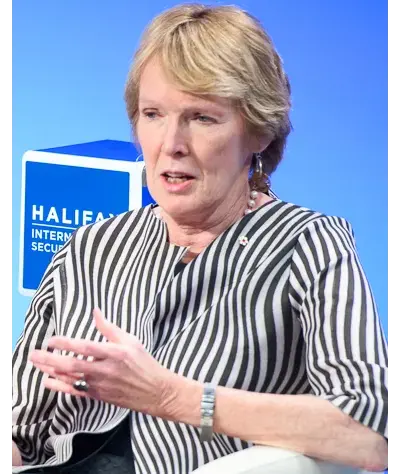
Margaret Olwen MacMillan CC CH is a Canadian historian and professor at the University of Oxford. She is former provost of Trinity College, Toronto, and professor of history at the University of Toronto and previously at Ryerson University. MacMillan is an expert on history and international relations.
