John F. Kennedy Quotes
With all of the history of war, and the human race's history unfortunately has been a good deal more war than peace, with nuclear weapons distributed all through the world, and available, and the strong reluctance of any people to accept defeat, I see the possibility in the 1970's of the President of the United States having to face a world in which 15 or 20 or 25 nations may have these weapons.
Kennedy, John F. "The President's News Conference," March 21, 1963. Public Papers of the Presidents of the United States: John F. Kennedy, 1963. Washington, D.C.: United States Government Printing Office, 1964, p. 280.


This rhetoric turned out to be just that. When Israel developed a nuclear capability, the Egyptians became more rational and sobered. It was Anwar Sedate however who was the Egyptian leader wise enough and strong enough to make peace with Israel.


At the time Iran was claiming that its nuclear program was for atomic energy only.


This quotation is very important in helping to understand the 1950s in America with respect to nuclear weapons policy. McCormick was one the better educated, sophisticated, and influential Americans. Yet he appears to be a technological and nuclear ignoramous. Most people had not yet realized that atomic weapons were not just much larger traditional bombs. They could do terrible damage, but it would always be localized they thought. Chicago might be destroyed but the people out of range would be OK. He never got it that a dirty bomb could be dropped on Detroit and depending on which way the wind is blowing could wipe out Chicago and much of the Midwest as well. He knew nothing of the genetic effect the radiation, nor the implications for the environment of maintaining a large nuclear manufacturing industry. He and many like him did not realize that after the first bombs were created, how easy it would be for the Russians and others to also develop a nuclear arsenal. And 50,000 warheads was just a matter of effort. The implications of these things would inhibit our carrying out his and others ideological views of foreign policy. Oppenheimer and most nuclear scientists explained all this, but believing them and acting on those beliefs would have been too much of a change.


One new danger that nuclear powers add to the usual problems of conflict, is that a nuclear power, about to lose a war in a humiliating way, might just use his nuclear weapons in revenge. So much damage will be done that the victory turned out to have been a bad thing. So ironically, with a nuclear enemy. Your military dare not win to dominantly with conventional weapons.


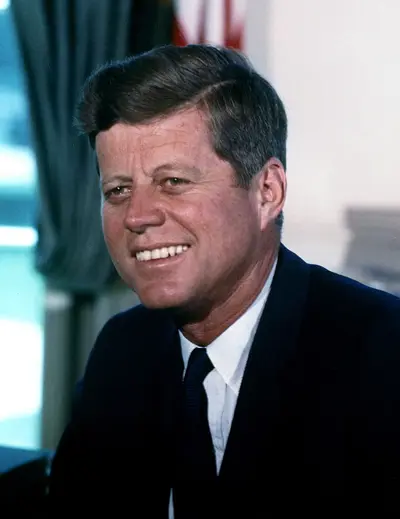
John Fitzgerald Kennedy, often referred to by his initials JFK, was an American politician who served as the 35th president of the United States from 1961 until his assassination in 1963. Kennedy served at the height of the Cold War, and the majority of his work as president concerned relations with the Soviet Union and Cuba. A Democrat, Kennedy represented Massachusetts in both houses of the U.S. Congress prior to becoming president.
