William Halsey Quotes
Before Guadalcanal the enemy advanced at his pleasure - after Guadalcanal he retreated at ours.
Halsey, William F., and Joseph Bryan. Admiral Halsey's Story. Whittlesey House, 1947.


In 1930, Japan, Britain, and the United States had signed an agreement that submarines would not sink merchant vessels without having first placed passengers and crew in a place of safety. However, when Japan attacked Pearl Harbor and bombed civilians as well as military and had a pattern of bombing and shelling civilians in China, the U. S. took the position that Japan had abrogated all treaties and therefore abrogated the 1930 treaty. It was more of a symbolic gesture as at the time the American forces were in no shape to attack Japanese merchant shipping though later in the war, it became material. By that time, the Japanese had murdered American prisoners of war on the Bataan Death March and elsewhere and had slaughtered civilians in the Philippines and all the other territories that they invaded. The niceties of the 1930 treaty was one of the first casualties of Japanese aggression.


He was absolutely right, but Hitler paid him no heed. See {631290} for his suggested course for Germany.

The Nazis occupied the cities, but the partisans survived in the mountains. The resistance was ferocious and very effective. From a German Soldier’s point of view, the Yugoslav front was the most dangerous assignment where his odds of being killed was even greater than the Russian front.

The only soldier ever so honored. See {604732} for Japanese attitude toward surrender.


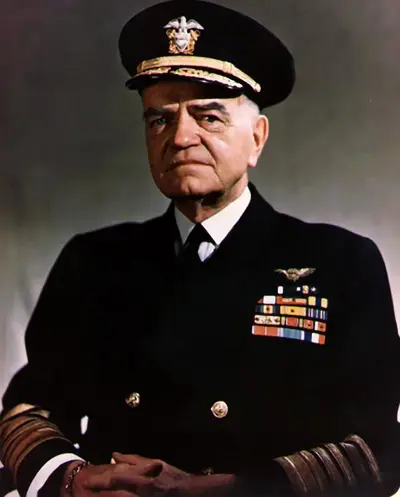
William Frederick Halsey Jr. was a fleet admiral in the United States Navy during World War II. He is one of four individuals to have attained the rank of fleet admiral of the United States Navy, the others being Ernest King, William Leahy, and Chester W. Nimitz.
