Shigeru Yoshida Quotes
We have listened here to the delegates who have recalled the terrible human suffering, and the great material destruction of the late war in the Pacific. It is with feelings of sorrow that we recall the part played in that catastrophic human experience by the old Japan.
Yoshida, Shigeru. "Speech at the San Francisco Peace Conference." Conference for the Conclusion and Signature of the Treaty of Peace with Japan: San Francisco, California, September 4-8, 1951, Record of Proceedings, U.S. Government Printing Office, 1951, pp. 277-282.


The note was found in an abandoned Japanese camp on Bataan. There are some who believe that this note was a forgery. However, most think it genuine as it reflected one of the Japanese
“aces in the hole” to defend against an allied invasion of the Japanese mainland. It was one of the reasons that some American planners advocated use of the Atomic Bomb. Of course that was a real risk of using the bomb. The Japanese might be so angry and feel morally abused and kill the many allied prisoners they had. Many thought it was a lesser risk because it did not have the symbolic animus that foreigners occupying the Japanese homeland had. The quotation illustrates the amazing complexity that the American and allied leadership faced trying to end WWII in the Pacific.


She was referring to the aftermath of the Iraq War.
This quotation is important because the American public and their leaders saw only one course of action—invasion of the Japanese Mainland. The debate was whether to attempt the invasion right away or bomb and blockade Japan into destruction and starvation weakening the population so their resistance would not produce the kind of casualties that we had experienced with the Invasion of Okinawa. The bombing and blockade strategy was selected and 80 percent of Tokyo was obliterated. Yet the Japanese refused to surrender even after all its manufacturing capability was destroyed and the agriculture was beginning to be destroyed. Most Americans did not realize it but the atomic bomb was being made ready for use. After the test bomb in New Mexico, we had enough fissionable material for 2 bombs and it would take several months for each additional bomb. The use of the atomic bomb at the time seemed not much different from the massive bombing that had already taken place. More Japanese were killed in some of these conventional bombings than with the Atomic Bomb. The key believe was that the Japanese would not give up. After the first A bomb, they still would not surrender, and when the Emperor decided on surrender after the 2nd bomb, there was a military insurrection in the palace to stop the Emperor’s surrender message to the people from being broadcast. It was just minutes too late, and the Emperor had to be obeyed. Invasion, with its terrible casualties—many more than the atomic bombs—was unnecessary.


The soldiers obeyed their orders and killed every man, woman and child they could find outside the city. They beheaded captured prisoners, bayoneted pregnant women and children. All civilian houses were burned, often with the people trapped inside.


This statement caused great consternation. NcNutt did try to explain that he was speaking personally and not for the Government, but there was a small proportion of America who had concluded that all Japanese should be killed. Such an concept which was unthinkable 5 years earlier was considered as a result of several factors: The Japanese had murdered many American prisoners of war. Killed millions of civilians throughout Asia including doing medical and weapons experiments on live human beings. They had practiced torture, compulsory prostitution and mass rape of conquered territories. At the same time, the Germans had tried to exterminate all the Jews and, with some Japanese help, did kill two-thirds. The concept of genocide had been introduced to Americans as the concentration camps were liberated. And American casualties in the Pacific had been heavy. Vengeance was desired by many. Fortunately, the overwhelming majority of Americans never considered genocide seriously.

After the sneak attack on Pearl Harbor, Stimson drafted the Declaration of War that President Roosevelt would ask Congress to vote for. However, there was a small but very vocal group of extreme Republican conservatives who opposed assisting England against Hitler and saw German and Italian Fascism as positive forces. They would oppose any administration declaration of war against Germany and Italy who had not yet attacked any American facilities. The President realized that German and Italy had a Mutual Defense Treaty with Japan, and when we declared war against Japan, would have to ally with Japan or reneg on their treaty. So FDR removed Germany and Italy from the Declaration and Congress just declared war against Germany. In the next days, Germany and Italy declared war against the United States, and the de facto situation was as Stimson had drafted it, but FDR had not given the right wing American Fascist sympathizers any issue to criticize the administration.


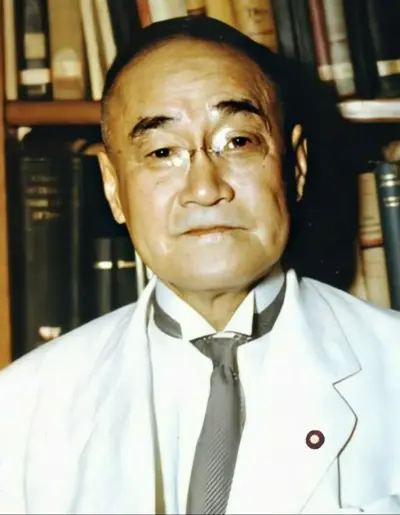
Shigeru Yoshida (吉田 茂, Yoshida Shigeru) was a Japanese diplomat and politician who served as Prime Minister of Japan from 1946 to 1947 and from 1948 to 1954. Yoshida was one of the longest-serving Japanese Prime Ministers, and is the third-longest serving Prime Minister of Post-occupation Japan.
