Doc Hastings Quotes
V-J Day, or Victory in Japan Day, marks the date of the Japanese surrender that ended fighting in the Pacific.
Hastings, Doc. Public statement. Office of Representative Doc Hastings, 2005.


After the Hiroshima bomb there was still no surrender by the Japanese. The decision was made to drop the second bomb on Nagasaki.


This quotation is important because the American public and their leaders saw only one course of action—invasion of the Japanese Mainland. The debate was whether to attempt the invasion right away or bomb and blockade Japan into destruction and starvation weakening the population so their resistance would not produce the kind of casualties that we had experienced with the Invasion of Okinawa. The bombing and blockade strategy was selected and 80 percent of Tokyo was obliterated. Yet the Japanese refused to surrender even after all its manufacturing capability was destroyed and the agriculture was beginning to be destroyed. Most Americans did not realize it but the atomic bomb was being made ready for use. After the test bomb in New Mexico, we had enough fissionable material for 2 bombs and it would take several months for each additional bomb. The use of the atomic bomb at the time seemed not much different from the massive bombing that had already taken place. More Japanese were killed in some of these conventional bombings than with the Atomic Bomb. The key believe was that the Japanese would not give up. After the first A bomb, they still would not surrender, and when the Emperor decided on surrender after the 2nd bomb, there was a military insurrection in the palace to stop the Emperor’s surrender message to the people from being broadcast. It was just minutes too late, and the Emperor had to be obeyed. Invasion, with its terrible casualties—many more than the atomic bombs—was unnecessary.

Umezu was one of several members of the Japanese War Council, that did not want to surrender even after the second atomic bomb destroyed Nagasaki. He and the other hard liners were convinced that the Japanese could inflict such heavy casualties on an invading force of the mainland that the Allies would not insist on unconditional surrender and Japan could negotiate favorable terms. These hard liners had already lived through the firebombing of Tokyo which in casualties was as bad as the atom bomb attacks, and felt that they could maintain a defensive force even if all the major cities of Japan were destroyed. Fortunately for all parties, the Emperor overruled Umezu and the hardliners. Umezu and the other hard liners had personal reasons to want to negotiate terms. They had committed war crimes and did not want to be brought to account. He was tried after the surrender and sentenced to life in prison where he died of cancer after 4 years.

The only soldier ever so honored. See {604732} for Japanese attitude toward surrender.

The second atomic bomb had just been dropped.

Referring to the use of the atomic bomb in World War II:


Truman had just told Stalin about the new technology. Stalin had actually already known something about it as the result of Soviet espionage in the United States.


A few Americans who were too young to remember WWII hav in retrospect questioned the use of the Atomic Bomb against Japan. Young Japanese feel even stronger on this point. This quotation is very important because it comes for a senior Japanese official who knew the conditions at the time.

Bethe and other European refugees joined American and British scientists at Los Alamos, NM, for the development of the atomic bomb.

The note was found in an abandoned Japanese camp on Bataan. There are some who believe that this note was a forgery. However, most think it genuine as it reflected one of the Japanese
“aces in the hole” to defend against an allied invasion of the Japanese mainland. It was one of the reasons that some American planners advocated use of the Atomic Bomb. Of course that was a real risk of using the bomb. The Japanese might be so angry and feel morally abused and kill the many allied prisoners they had. Many thought it was a lesser risk because it did not have the symbolic animus that foreigners occupying the Japanese homeland had. The quotation illustrates the amazing complexity that the American and allied leadership faced trying to end WWII in the Pacific.

There were some doubts the scientists developed after Germany had surrendered as Hitler had been their greatest fear. So they were briefed on the planned invasion of the Japanese mainland and the military medical preparations for treating and caring for ½ million serious wounded casualties. In addition, given the state of war, there was expected about the same number of American Military deaths. On top of that, there would be many more Japanese military casualties plus even more Japanese civilian deaths and wounded. The use of the Atom Bomb would save all those lives but have casualties of its own, but far fewer. At the time, surprising to most people now, the use of the atomic bomb was not an issue of controversy at all. There were no Congressman who questioned it, no newspapers which editorialized against the use of the bomb. There were not even any other counties which protested its use.

In the Potsdam Declaration the Allies gave their demands for Japanese unconditional surrender. This was the Japanese reaction. The plans to drop the atomic bombs were then approved.


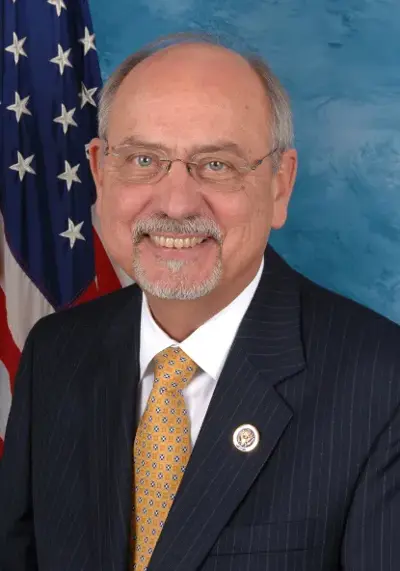
Richard Norman Hastings is an American politician and member of the Republican Party who served as the U.S. Representative for Washington's 4th congressional district from 1995 until his retirement in 2015. The district includes much of central Washington including the Tri-Cities, Yakima, and Moses Lake. The most conservative Republican in Washington's Congressional delegation, he chaired the House Committee on Ethics from 2005 to 2007 and chaired the House Committee on Natural Resources from 2011 to his leaving office.
