David Suzuki Quotes
On December 7, 1941, an event took place that had nothing to do with me or my family and yet which had devastating consequences for all of us - Japan bombed Pearl Harbour in a surprise attack. With that event began one of the shoddiest chapters in the tortuous history of democracy in North America.
Suzuki, David. David Suzuki: The Autobiography. Greystone Books, 2006.


The first broadcast was in German and directed at German citizens. Then broadcasts were made to the occupied European countries in their languages.
He was describing a meeting that he and General Marshall had conducted with FDR, Secretary of State Cordell Hull and others. In less than two weeks, the Japanese would attack Pearl Harbor without any declaration of war, as Marshall had predicted.

The CIA was supplying planes and pilots to assist anti-Government rebels in their efforts to overthrow Sukarno. Meanwhile, the Secretary of State and other American officials were insisting that America had no involvement in the Indonesian civil war. See {591337}.


America, England, Germany and France Many Japanese leaders predicted war between the Great Powers while America and its European Allies did not see the danger as clearly. Shortly after 1936, Hitler began the Second World War. Japan was indeed prepared. Hiranuma became one of the Japanese extremists and after WWII was convicted of war crimes and given a life sentence.

Note that he assumes that not only will there be another World War, but he assumes that we will be on opposite sides.

The quotation is notable as it illustrates the great difficulty that modern democracies have with extreme Islamic fundamentalists. Their very perception and world view is so different that often we think of the extremists as insane and they often feel the same way about us.


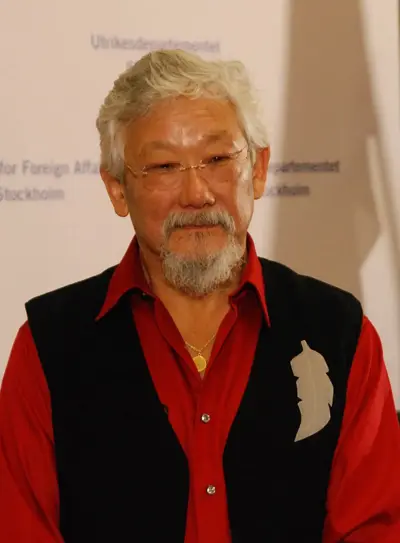
David Takayoshi Suzuki CC OBC FRSC is a Canadian academic, science broadcaster and environmental activist. Suzuki earned a Ph.D. in zoology from the University of Chicago in 1961, and was a professor in the genetics department at the University of British Columbia from 1963 until his retirement in 2001. Since the mid-1970s, Suzuki has been known for his television and radio series, documentaries and books about nature and the environment. He is best known as host and narrator of the popular and long-running CBC Television science program The Nature of Things, seen in over 40 countries. He is also well known for criticizing governments for their lack of action to protect the environment.
