Richard Helms Quotes
In World War Two, in the OSS, we knew what our motivation was: to beat the goddamn Nazis. In the Cold War, we knew what our motivation was: to beat the Goddamn Russians. Suddenly the Cold War is over, and what is the motivation? What would compel someone to spend their lives doing this kind of thing?
Richard Helms, 1913-2002, Director, U. S. Central Intelligence Agency, U. S. Ambassador to Iran Interview with Tim Weiner, Legacy of Ashes: The History of the CIA, 2007
Sourced by: Eigen's Political and Historical Quotations


Agree resigned from the CIA in protest to its political positions.


Indeed, many of the countries went communist as Kennan predicted.

Leval was an appeaser and a collaborator with the Nazi’s. He led the government in name but the Germans really controlled the country. His actions killed tens of thousands of French men and women by turning them over to the Germans. After the Germans were defeated in WWII, Leval was shot as a traitor by the Free French forces.

Recipient of the National Security Medal

Eisenhower was then Supreme Allied Commander.

The then Attorney General had established a back channel to the Russian agent. There was genuine fear by the Russians and some in America that there were still many Nazis and German nationalists who would try and influence, if not take over, German politics to produce another aggressive German fascist state. The Russians had lost 22 million citizens to the Germans in the war and had faced a defeated Germany where virtually every German over the age of 30 had been cheering for and supporting Hitler a decade ago. Neither the Russians nor we and the other allies had not yet seen the remarkable turn-around that the German nation would make and the intense anti-fascist, non-military ethos that would be brought by the younger German generations. The direction of Germany was then very unpredictable.

Precursor to CIA. During WWII Donovan’s OSS, the FBI and the State Department had the three civilian intelligence organizations while each of the 4 Armed Services had their own intelligence services. Rarely did any of these 7 organizations communicate with any of the others. In the case of the OSS, the FBI and the military services tended to try and obstruct many of their operations. This was the first call for what became the CIA.

At the time the USSR was our ally. Neither the military or the state department focused in gaining intelligence on any ally and J. Edgar Hoover had for years focused on intelligence about communists in the United States but not in Russia and the rest of the world. These other agencies treated Souers with disdain or ignored him, but this memo showed the importance of Truman’s idea of having an independent intelligence agency to inform the President.
This quotation illustrates the derogatory and disrespectful attitude that many high level American officials then had towards Arab leaders. No one objected to or reprimanded Symmes for his use of the word “mongrels”. And he was the State Departments leading expert on the Middle East and Arab Cultures. In the photo, Symmes is the gentlemen on the right.
This fact was one of the reasons that McCarthyism and HUAC were able to get traction. The Red Scare paranoids found something to really worry about. They overreacted, sensing the problem not as one of a large number of misguided and naïve people trying to help America do better, but as active spies controlled by the Kremlin who wanted to destroy the American way of life. There were two basic reasons these naïve officials acted that way. Many of them had not forgotten the devastation of the American people in the Great Depression and believed that capitalism had almost failed completely and the rough edge had to be taken off American capitalism by injecting some socialist principles such as stronger labor unions, ending racial and religious discrimination, controlling monopolies, and regulating critical industries. They also were mindful of the fact that the Russians were bearing the brunt of the WWII casualties—military and civilian—while killing more of the Germans and capturing more German occupied territory than the other allies together, yet they were not receiving the same level of assistance—technical, intelligence, economic and political as the British. They saw helping the Russians as saving American lives on the battlefield by making them more effective and keeping German soldiers and weapons away from the Western front and Americans. They also remembered that many in Congress were opposed to our entering WWII in Europe until Germany declared war on America. They had in many cases been apologists for Fascism and passionate enemies of communism. Some American industrialists like Henry Ford were anti-Semitic and overt admirers of Hitler. {586985} So these officials tried to redress the imbalance that existed while at the same time little was really known about Soviet Russia and the Stalin excesses that were as bad as some of Hitler’s. {634969} The only information Americans had were the terrible casualties the Russians were taking and the in kind that they were dishing out to the Germans. The number of Soviet spies in America were few and commensurate with the number of agents we had in Russia. But few Americans realized the difficulty the U. S. and the rest of the democratic world would have with Russia after the war was won.

The potential spies I interviewed after WWII were He was one of the earliest employees of the CIA. He was assigned to interview all the characters from Eastern Europe in including Russia who were offering their services to the Americans to spy on the Russians whose troops and puppet communist governments were controlling most of the area. Unfortunately, most of these volunteers were just trying to save their skins or settle scores and had served the Nazis and often committed murder and other war crimes themselves. None the less, the CIA used many of them. See {635149}.
Russia, from the old Soviet Union days, had the only gas pipeline into Lithuania and took advantage of their monopoly by charging the Lithuanians 15 percent more than they charged other European nations where the Russians had some energy competition. The Lithuanians, decided to tie up a very large vessel at an island in their harbor to which Liquid Natural Gas (LGN) could be delivered by ship and converted to gaseous form and piped onto the mainland to provide competition for the Russians. However, the island was a bird sanctuary that was not supposed to be used for anything that might change the ecological balance of the island. This quotation shows that in some circumstances, environmentalists are willing to compromise to balance the benefits and costs.


The 1st the CIA ever had. Popov was, in the 1950s, considered the CIA’s most valuable agent. He was motivated by deeply felt anger at Soviet exploitation of Russian peasants, including his family. He was caught and executed by Russian authorities in 1960. The quotation illustrates just how simple was his initial communication for spying.

Ford was a great admirer of Adolf Hitler who thought Ford was the greatest of the Americans. He was an inveterate Fascist—racism and all. He vehemently opposed United States entry into WWII against the Nazis. He was awarded a medal by Hitler, and he had no qualms about taking it.

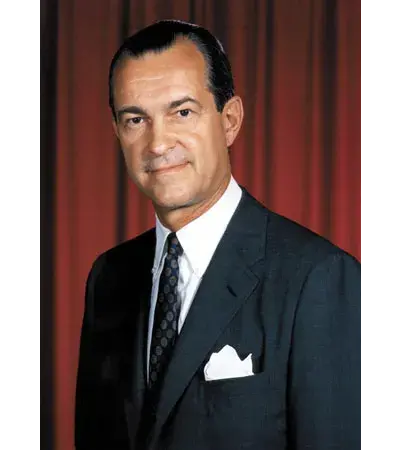
Richard McGarrah Helms was an American government official and diplomat who served as Director of Central Intelligence (DCI) from 1966 to 1973. Helms began intelligence work with the Office of Strategic Services during World War II. Following the 1947 creation of the Central Intelligence Agency (CIA) he rose in its ranks during the presidencies of Truman, Eisenhower and Kennedy. Helms then was DCI under Presidents Johnson and Nixon.
