Henry L. Stimson Quotes
When the news first came that Japan had attacked us my first feeling was of relief that ... a crisis had come in a way which would unite all our people. This continued to be my dominant feeling in spite of the news of catastrophes which quickly developed.
Stimson, Henry L. Diary entry, 7 Dec. 1941. The Henry Lewis Stimson Diaries, Manuscripts and Archives, Yale University Library.


He was describing a meeting that he and General Marshall had conducted with FDR, Secretary of State Cordell Hull and others. In less than two weeks, the Japanese would attack Pearl Harbor without any declaration of war, as Marshall had predicted.

After the sneak attack on Pearl Harbor, Stimson drafted the Declaration of War that President Roosevelt would ask Congress to vote for. However, there was a small but very vocal group of extreme Republican conservatives who opposed assisting England against Hitler and saw German and Italian Fascism as positive forces. They would oppose any administration declaration of war against Germany and Italy who had not yet attacked any American facilities. The President realized that German and Italy had a Mutual Defense Treaty with Japan, and when we declared war against Japan, would have to ally with Japan or reneg on their treaty. So FDR removed Germany and Italy from the Declaration and Congress just declared war against Germany. In the next days, Germany and Italy declared war against the United States, and the de facto situation was as Stimson had drafted it, but FDR had not given the right wing American Fascist sympathizers any issue to criticize the administration.


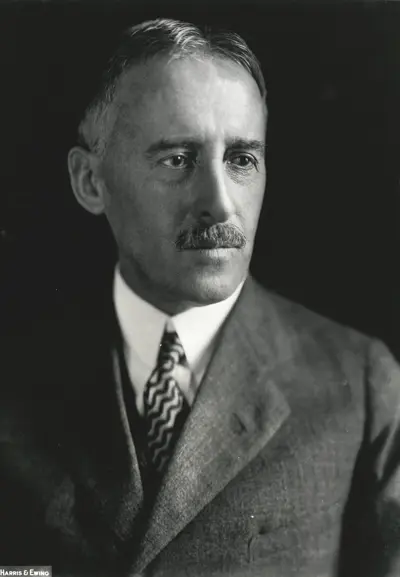
Henry Lewis Stimson was an American statesman, lawyer, and Republican Party politician. Over his long career, he emerged as a leading figure in U.S. foreign policy by serving in both Republican and Democratic administrations. He served as Secretary of War (1911–1913) under President William Howard Taft, Secretary of State (1929–1933) under President Herbert Hoover, and Secretary of War (1940–1945) under Presidents Franklin D. Roosevelt and Harry S. Truman.
