Thomas Hobbes Quotes
Because silver and gold have their value from the matter itself, they have first this privilege, that the value of them cannot be altered by the power of one, nor of a few commonwealths, as being a common measure of the commodities of all places. But base money may easily be enhanced or abased.
Hobbes, Thomas. Leviathan. Andrew Crooke, 1651, p. 129.


Harvey was one of those who argued that silver and not gold should be the basis of American money. The country was growing and the amount of gold was relatively fixed; therefore money was scarce and many believed the English and American financiers were hording gold deliberately. The final solution was not a gold standard or a silver standard but what we have today—a currency backed only by the full faith and credit of the U. S.


What Franklin Delano Roosevelt began, President Nixon would in 1971 complete by removing America from the gold standard entirely and ending fixed rates of exchange. There have been those in government who did not understand the modern economics of money and who believed that currency had to have a fixed rate of exchange for gold or silver otherwise it was worthless. Roosevelt had to deal with them as did Nixon later. Even into the 21st century when it had been amply demonstrated that the best currency in the world was the United States dollar precisely because it was backed up by the full faith and credit of the United States Government, there were those who complain that United States money is not sound currency and argue for the return of the gold standard.

There has always been a fear of inflation and currency debasement by governments. Since ancient times, rulers issued coins and when they were made of cheap metals like copper or iron, the ruler could mint as much as he wanted and when he did so the value went down. By using only precious metals, gold and silver, for coins, there would be a natural restraint on government. Garfield was one of those who believed that we should always have money of gold and silver. The United States would use that principle for the next century even backing its paper money with gold and silver. In the Nixon administration the United States abandoned the gold standard. Today, it is the ability of a country to produce things that maintains value of paper money which has been supplanted in many cases by electronic money.

There were more silver mines than gold and the owners and others who wanted to increase the money supply had advocated using silver as well as gold to back the money supply. As silver was more plentiful, financiers felt that the American money had been diluted and other its value went down. Cleveland proposed that the legislation allowing so much silver be repealed. It was. Note the appeal to international opinion. At the time the United States was not one of the world’s superpowers and what the English and French thought about our money was extremely important and likely to persuade voters. A century later, American public opinion was not as influenced by that of other nations.

This objective finally reached its peak in the Nixon administration when the U. S. went off the gold standard. 75 Years after FDR tried to make the U. S. dollar more resilient, America had been so successful that many foreign governments having the same problem of little or no control over their currency, have pegged their currency to the U. S. dollar, thus gaining our stability.

At the time the United States was on the Gold Standard and all our money was backed by gold. Root and others were afraid that a Federal Reserve Bank, a proposal that was being debated in Congress, would cause a large amount of paper money to be printed which other nations would obtain through trade and then exchange that for American gold—a process which would deplete the American gold supply. A few years before, William Jennings Bryan had argued that the Gold Standard did not allow America sufficient ability to increase the money supply to serve the growing population and economy. See {640992}.


The assumption was that money would always be backed by gold or silver. In effect, raising or allaying the money was to change the amount of gold or silver that a particular denomination of money would be able to be exchanged for. This is one of the interesting proofs that these processes did nothing economically—for if they could, no one would want the money. This has always been a weakness or a strength—depending on one’s political point of view—of a gold standard.

When gold and silver were used to make coins, there were dozens of schemes to cheat people. Many of these would be implemented by the official mints (makers of coins) often with the connivance of the ruler who would often get a cut. Davanzati warned princes against debasing the coins on moral as well as pragmatic grounds.

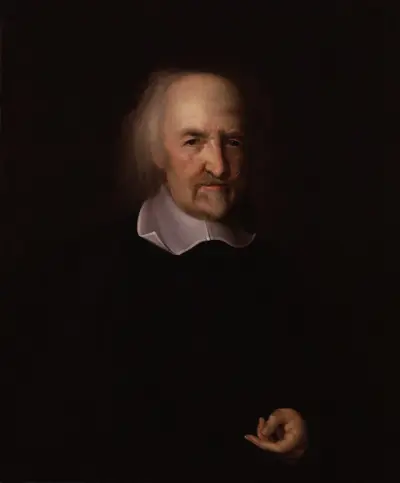
Thomas Hobbes was an English philosopher, considered to be one of the founders of modern political philosophy. Hobbes is best known for his 1651 book Leviathan, in which he expounds an influential formulation of social contract theory. In addition to political philosophy, Hobbes contributed to a diverse array of other fields, including history, jurisprudence, geometry, the physics of gases, theology, and ethics, as well as philosophy in general.
