John Law Quotes
The Power the Magistrat [head of government] has to alter the Money in its Denomination or Fineness, takes away the chief Quality for which Silver was made Money
John Law, 1671-1729, Scottish Economist, Money and Trade Considered: With a Proposal for Supplying the Nation with Money, 1705
Sourced by: Eigen's Political and Historical Quotations

There has always been a fear of inflation and currency debasement by governments. Since ancient times, rulers issued coins and when they were made of cheap metals like copper or iron, the ruler could mint as much as he wanted and when he did so the value went down. By using only precious metals, gold and silver, for coins, there would be a natural restraint on government. Garfield was one of those who believed that we should always have money of gold and silver. The United States would use that principle for the next century even backing its paper money with gold and silver. In the Nixon administration the United States abandoned the gold standard. Today, it is the ability of a country to produce things that maintains value of paper money which has been supplanted in many cases by electronic money.

Economists they world over have differed as to how critical it was to have a money supply that is based on a gold standard or other precious metal. United States history has had a dispute over whether the money should be backed by gold or silver. Finally, under the Richard M. Nixon administration, the United States went off the gold standard and American money ever since is only backed by the ‘full faith and credit’ of the United States. Some politicians like Paul believe this is a poor policy since it allows governments to control their own money supply irrespective of their gold or silver holdings. Paul goes further than most and sees freedom itself dependent on a precious metal standard. Most politicians disagree.


The same argument can be made against the modern paper money supply. What Jefferson and most of the founding fathers, with the exception of Alexander Hamilton. did not realize was that the major stability of any kind of money was not only the silver or gold that backed it but the political and legal stability of the nation and the size of its productive economy. Where Jefferson was right however is that all these banknotes at the time were issued by local private banks. The Government had no responsibility for paper money and had no knowledge of how much paper money any bank issues and whether or not they had any silver to back it up. Banks didn’t trust other bank’s notes and would only redeem them at a discount. A $10 note from a South Carolina bank might only be worth $7 in New York and $6 in Boston. The early American monetary system was a mess.

This was a very astute prediction. At the time, the United States gold mining production was second only to South Africa and American currency was based on the gold standard which seemed to all to be permanent. Half a century later, the U. S went off the gold standard.

The assumption was that money would always be backed by gold or silver. In effect, raising or allaying the money was to change the amount of gold or silver that a particular denomination of money would be able to be exchanged for. This is one of the interesting proofs that these processes did nothing economically—for if they could, no one would want the money. This has always been a weakness or a strength—depending on one’s political point of view—of a gold standard.

This is the first major history of banks written in the United States.


This is an excellent historical example of how damaging it can be for a country if its leaders do not understand the technicalities of economics and currency manipulation.


At the time, a bank note—paper money issued be a private bank—was not backed by any gold or silver and was not insured bym the government. A bank could print as much as they wanted, so it was always worth less as the further you were from the particular issuing bank, the less you could get your bank note, because no one knew whether or not the issuing bank would redeem the note or even be in existence. So every private bank note had diminished value for the public. However, carrying gold and silver around and making change for precious metals was difficult and often impractical. So people used banknotes. The same thing happens with credit cards today. The merchant has to pay a fee to the credit card company and the bank and therefore charges us more for whatever we buy. But most consumers and merchants are willing to pay the difference to obtain the convenience of the credit card,


At the time, there was no United States currency. Private banks in some of the states issued their own money. A dollar from Georgia might only be worth 75 cents in New York.

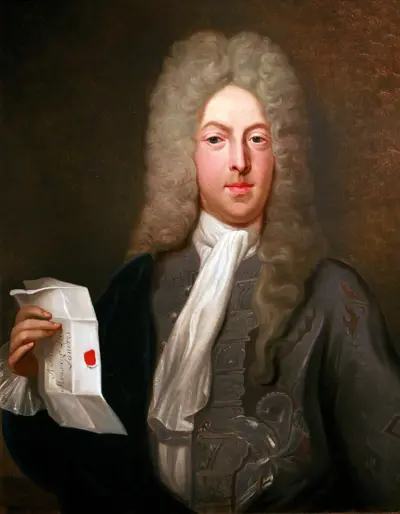
John Law was a Scottish economist who distinguished money, a means of exchange, from national wealth dependent on trade. He served as Controller General of Finances under the Duke of Orleans, who was regent for the juvenile Louis XV of France. In 1716, Law set up a private Banque Générale in France. A year later it was nationalised at his request and renamed as Banque Royale. The private bank had been funded mainly by John Law and Louis XV; three-quarters of its capital consisted of government bills and government-accepted notes, effectively making it the nation's first central bank. Backed only partially by silver, it was a fractional reserve bank. Law also set up and directed the Mississippi Company, funded by the Banque Royale. Its chaotic collapse has been compared to the 17th-century tulip mania in Holland. The Mississippi bubble coincided with the South Sea bubble in England, which allegedly took ideas from it. Law as a gambler would win card games by mentally calculating odds. He originated ideas such as the scarcity theory of value and the real bills doctrine. He held that money creation stimulated an economy, paper money was preferable to metal, and dividend-paying shares a superior form of money. The term "millionaire" was coined for beneficiaries of Law's scheme.
