David Ricardo Quotes
Experience, however, shows that neither a state nor a bank ever have [sic] had the unrestricted power of issuing paper money without abusing that power; in all states, therefore, the issue of paper money ought to be under some check and control; and none seems so proper for that purpose as that of subjecting the issuers of paper money to the obligation of paying their notes either in gold coin or bullion.
Ricardo, David. On the Principles of Political Economy, and Taxation. John Murray, 1817, p. 506.


This objective finally reached its peak in the Nixon administration when the U. S. went off the gold standard. 75 Years after FDR tried to make the U. S. dollar more resilient, America had been so successful that many foreign governments having the same problem of little or no control over their currency, have pegged their currency to the U. S. dollar, thus gaining our stability.

See {583710} for his grandchild’s variation.

Most modern economists argue just the opposite. The monetary supply for a growing world population would be insufficient for growth since the supply of gold is extremely limited. The United States was plagued by this problem from its earliest times as its growth was very strong, but there was not enough gold to support the growth. So silver was added, and then during the Civil War where growth rates were very large in the North, paper currency evaded the problem, which returned over the next century until the Nixon Administration—a very conservative one—shocked many conservatives by abandoning the Gold Standard and the U. S. has never returned to it.


Roosevelt saw to it that the contents of the telegram was shown to the press. Then this statement was seen by the foreign delegates who viewed themselves as ‘international bankers”. They were outraged and the conference blew up with no significant action taken. Roosevelt was desperately trying to lead America out of the Great Depression which Herbert Hoover had left him with. The dollar had been falling in value since the 1929 crash and one of the likely outcomes of the conference was European and other nations putting a plan together to stop the fall of the dollar. FDR however, wanted the dollar to continue to fall. This would make it harder for Americans by buy imported products, but easier to employ more Americans making products for export. The people hurt most by The Depression did not buy any imported products, and what they needed was food, housing, clothing, education and medical care, none of which would be affected by a weaker dollar and more expensive imports. However, he did not want a political argument with the wealthy and upper middle class who wanted cheaper imports, so some people believe that he made it seem that he had committed a diplomatic blunder and that caused the conference to collapse.


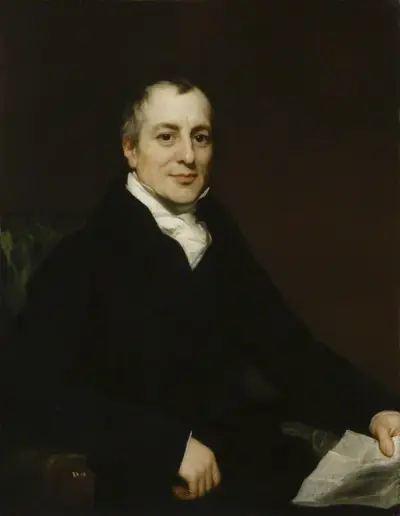
David Ricardo was a British political economist, one of the most influential of the classical economists along with Thomas Malthus, Adam Smith and James Mill. He was also a politician, and a member of the Parliament of Great Britain and Ireland.
