Alan Greenspan Quotes
As long as we issue fiat currency, I see no alternative to a legal tender law.
Greenspan, Alan. Testimony before the Committee on Financial Services, U.S. House of Representatives, July 20, 2005.


At the time any private bank could issue their own money. Private sector bankers thought it outrageous that the Congress should consider trampling on their rights to issue money. The solution that was finally adopted some years later was to use the Federal Reserve Board to control the money supply. It is independent of the Congress and the President but members are appointed by the President and confirmed by the Senate. Our system, like no other system, is a compromise where neither the Government or the Private Sector controls the American money supply.


At the time there was no national paper money. Individual banks printed their own and paper money was not accepted or heavily discounted most Americans. Most opposed a tender law that required paper money to be accepted in commerce.


At the time, there was no United States currency. Private banks in some of the states issued their own money. A dollar from Georgia might only be worth 75 cents in New York.

At the time, a bank note—paper money issued be a private bank—was not backed by any gold or silver and was not insured bym the government. A bank could print as much as they wanted, so it was always worth less as the further you were from the particular issuing bank, the less you could get your bank note, because no one knew whether or not the issuing bank would redeem the note or even be in existence. So every private bank note had diminished value for the public. However, carrying gold and silver around and making change for precious metals was difficult and often impractical. So people used banknotes. The same thing happens with credit cards today. The merchant has to pay a fee to the credit card company and the bank and therefore charges us more for whatever we buy. But most consumers and merchants are willing to pay the difference to obtain the convenience of the credit card,


Stamp was a banker and the 2nd richest man in England at the time. Yet he warned about aspects of banking that needed reform and regulation.

The very act of printing money created a debt—at the time and until the Nixon Administration which went off the gold standard—the government owed the gold or silver and the spicie—the printed money—was a promissory note.


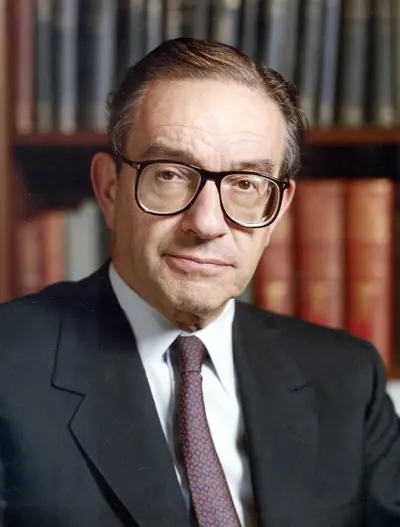
Alan Greenspan is an American economist who served five terms as the 13th Chair of the Federal Reserve of the United States from 1987 to 2006. He works as a private adviser and provides consulting for firms through his company, Greenspan Associates LLC. First appointed Federal Reserve chairman by President Ronald Reagan in August 1987, he was reappointed at successive four-year intervals until retiring on January 31, 2006, after the second-longest tenure in the position (behind William McChesney Martin).
